2025: A tough year for sustainability but strong progress on the Nature Positive agenda
The Nature Positive Initiative continued to build momentum throughout 2025, connecting wider audiences, strengthening the technical foundations for nature-positive action and deepening integration across all realms.
In a year shaped by geopolitical fractures, economic uncertainty and headwinds against sustainability, the Nature Positive Initiative coalition continued to build momentum, connecting wider audiences, strengthening the technical foundations for nature-positive action, and deepening integration across the ocean, freshwater, climate and biodiversity agendas.
Davos 2025: strategic discussions and the sixth Nature Positive Dinner
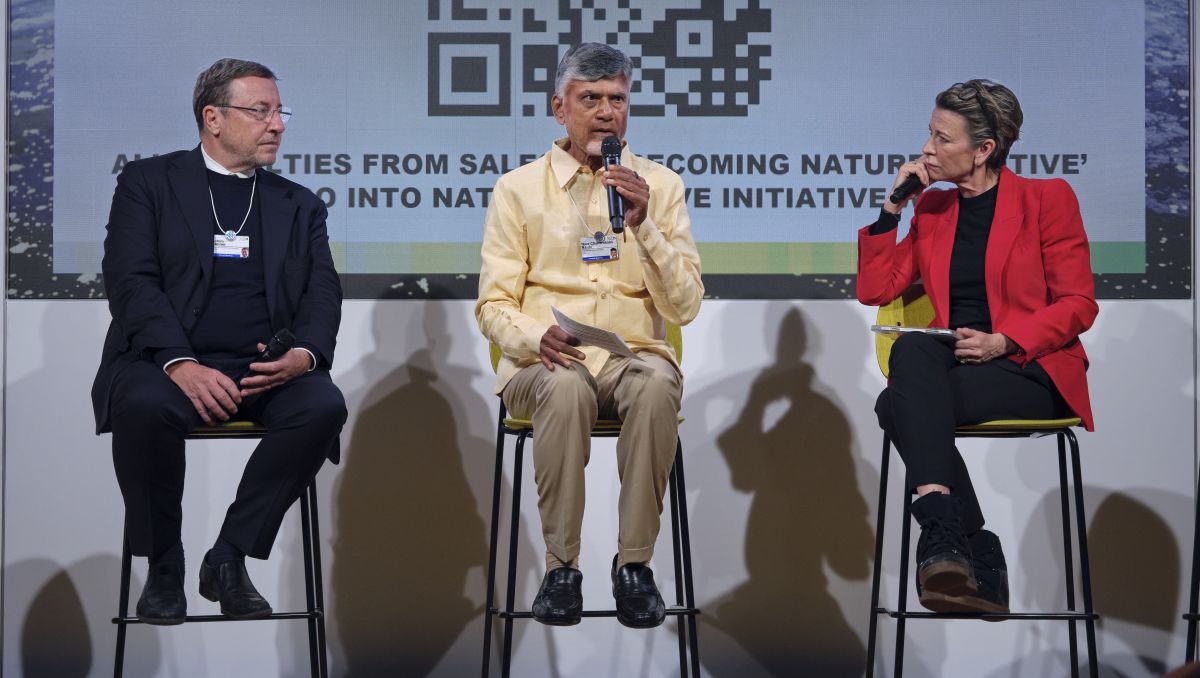
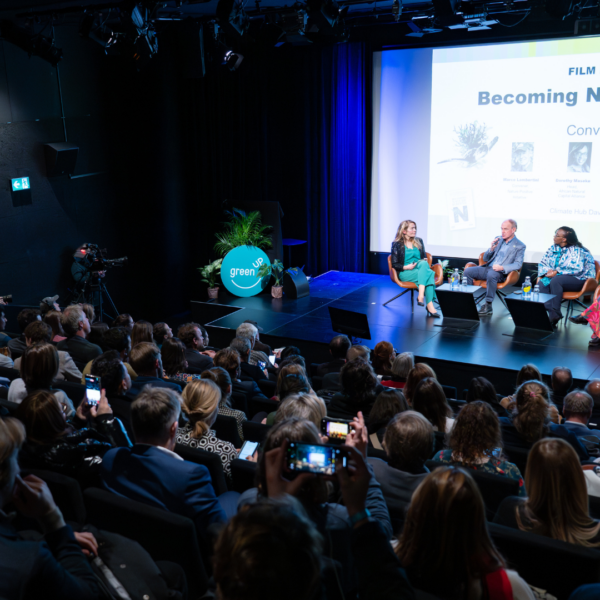
In January 2025, the Initiative engaged with global leaders across diverse sectors during the World Economic Forum’s annual meeting in Davos, including hosting the sixth Nature Positive Dinner. The dinner was a hot ticket event attended by over 200 global sustainability leaders, with 15+ speakers including Inger Andersen, Executive Director at UNEP, Achim Steiner, Administrator at UNDP, and HE Nara Chandrababu, Chief Minister for Andhra Pradesh, India. Read more on this and other Davos 2025 engagements here.
Publishing the book: ‘Becoming Nature Positive’
The book ‘Becoming Nature Positive: Transitioning to a Safe and Just Future’ was launched online and then in person during London Climate Action Week in June, reaching new audiences at a critical moment for global environmental leadership and crystallizing the what, why and how of Nature Positive.
Read the book review in the journal Nature. Watch the book launch virtual broadcast here (01:41:00 into the broadcast) and the London event recap video here. Discover what the book is about here and order the book or access the free online version via the link below.
The new book was also the feature of a dedicated evening hosted by the Hoffmann Centre for Global Sustainability at Geneva’s Graduate Institute in September, with a high-level panel discussion featuring book authors, contributors and supporters. See more here.
In a special edition for COP30 in Brazil, ‘Becoming Nature Positive’ was translated into Portuguese and published as ‘A Era da Natureza’, or ‘The Nature Epoch’. This special edition was created by the Arapyaú Institute with the Nature Positive Initiative and Editora Jandaíra and includes new chapters by Brazilian thought leaders from across the nature space, Indigenous knowledge and beyond.
Connecting global audiences at key events
The following months saw intensive engagement across Europe and Asia, with members of the Nature Positive Initiative Secretariat attending and contributing to events in Villars, London, Monaco, Washington DC, Beijing, Shanghai, San Jose and beyond, and a host of virtual convenings from Sydney to Kigali. Topics ranged from state of nature metrics to nature tech, and from the sustainable blue economy to ways of strengthening the movement for Nature Positive.
In June at the UN Ocean Conference in Nice, France, a process to foster consensus on how to measure nature-positive outcomes for the ocean was announced, extending the existing development of metrics to measure the health of terrestrial ecosystems into the marine realm.
The second Global Nature Positive Summit announced
In September, plans were announced to organize the second Global Nature Positive Summit in Kumamoto, Japan, on 14-16 July 2026, under the patronage of the Japanese Ministry of Environment. Driven by the Nature Positive Initiative and a group of leading international and Japanese organizations, the Summit will be a critical opportunity to advance progress towards a nature-positive and people-positive future in this critical year for biodiversity action.
A quadrennial gathering for nature: the IUCN Congress
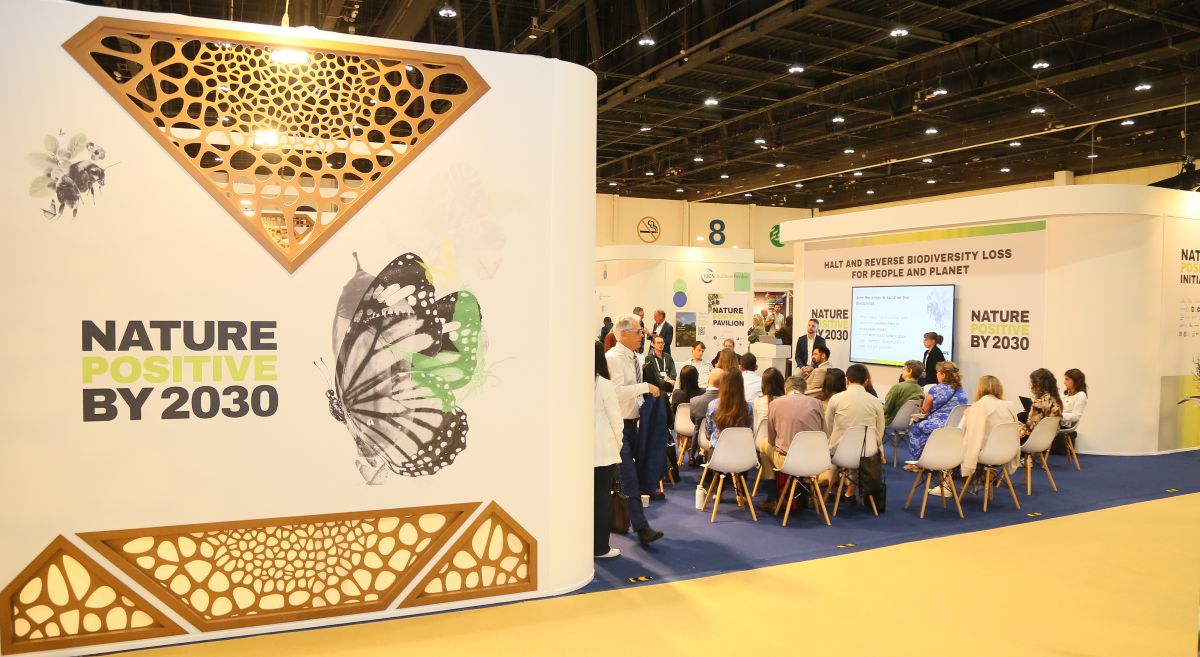
The IUCN World Conservation Congress in October in Abu Dhabi provided a critical opportunity to engage deeply with new audiences and underline the need to address the nature and climate crises together, as well as the critical role of business leaders in securing lasting transition. The Initiative was asked by the Congress organizers to work together with TNFD in supporting the organization of the first ever Business Summit at any IUCN Congress, mobilizing the private sector for a nature-positive future.
The Nature Positive Pavilion represented a key hub for nature-positive action, hosting over 25 events, featuring over 100 speakers and engaging more than 900 participants and covering numerous subjects including several sessions engaging various stakeholders as part of the consensus building process around a standardized state of nature metrics framework to measure progress towards nature-positive outcomes.
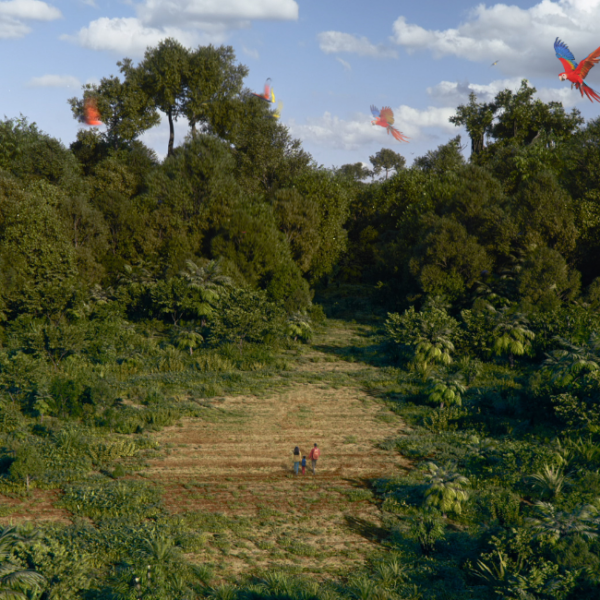
At the IUCN Congress the trailer of our new film, also called ‘Becoming Nature Positive’, was released. The full film launches in January 2026.
Climate and nature integration
Engagement continued through London Climate Action Week in June, and New York Climate Week in September, with efforts to further integrate the climate and nature agendas.
Then came COP30, the much anticipated ‘nature’ climate COP on the edge of the Amazon rainforest. In São Paulo and Belém, the Nature Positive Initiative hosted and attended many events to ensure nature was at the heart of climate discussions. These events highlighted how the private sector can and is leading the charge, why nature is fundamental to climate action, the need for better integration of the three Rio Conventions on climate, biodiversity and land restoration and how achieving a nature-positive and net zero world is essential for a safe, equitable and sustainable future for all. As part of the Standards Pavilion organized by ISO we held several events on how to credibly and practically measure nature-positive outcomes in a standardized way.
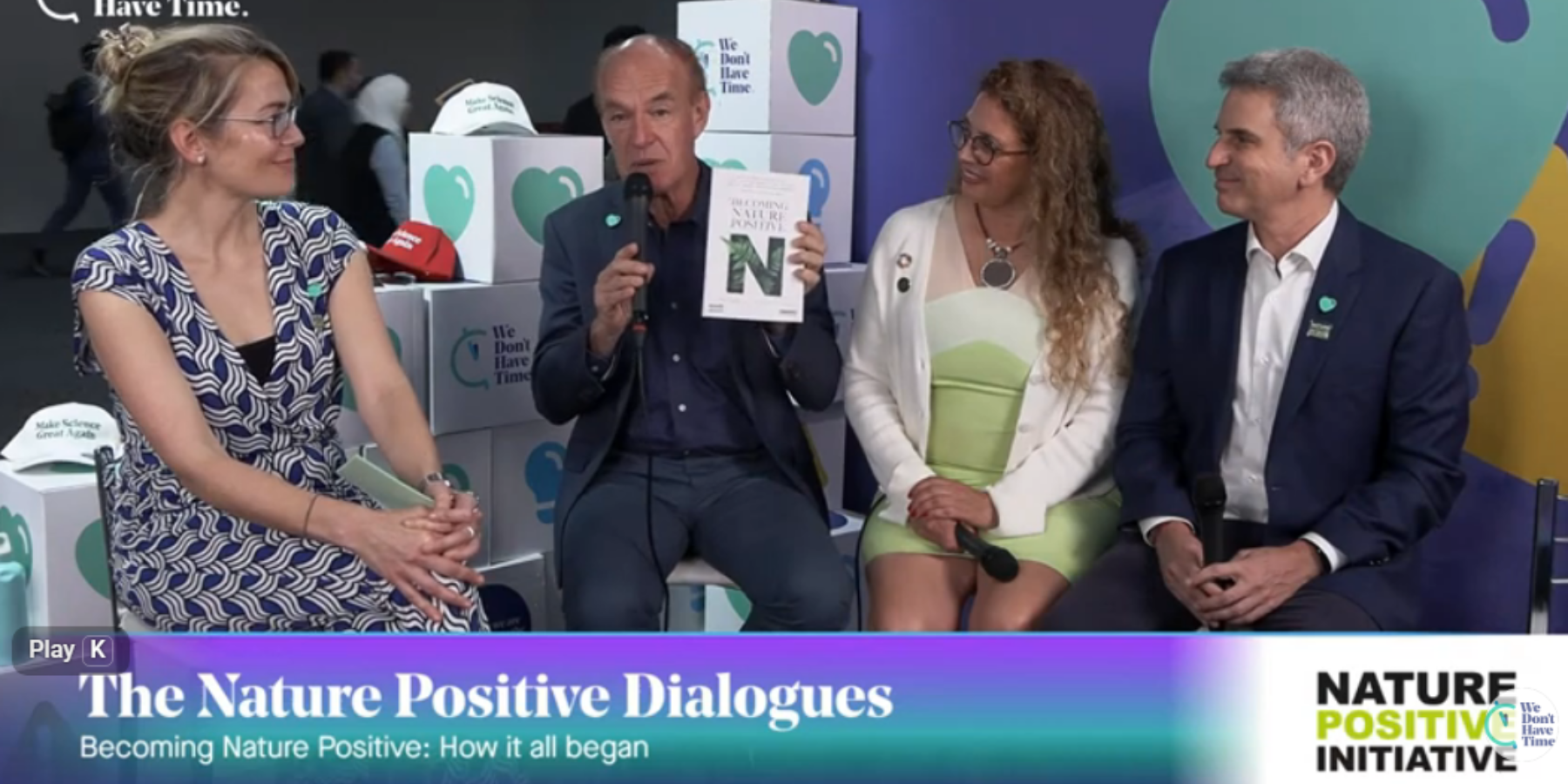
The contribution of the bioeconomy to the overall Nature Positive goal, championed by the Brazilian government, was discussed at various events and captured in this conversation between Marcelo Behar, the COP30 Presidency Bioeconomy Envoy, and Marco Lambertini, published by the World Economic Forum: How the bioeconomy helps people, planet and profit to exist in harmony.
Conversations around the Nature Positive imperative were also livestreamed and broadcast to a wider global audience through our Nature Positive Dialogues series with We Don’t Have Time, featuring a range of thought leaders and visionaries across the nature space. Among other events and engagements, we helped ensure nature positive stayed top of mind and in the climate discourse during COP.
Continued consultation, development and piloting of state of nature metrics
2025 also marked a decisive year for turning the concept of nature positive into something measurable and actionable. The Nature Positive Initiative continued global consultation on metrics, engaging governments, businesses, financial institutions, scientists and civil society to ensure the framework is robust, credible and usable across contexts.
Throughout the year extensive activity has taken place to further develop one aligned set of state of nature metrics that will work in conjunction with existing impact and development reporting. A pilot programme was launched in May to test the draft set of terrestrial metrics with around 30 businesses and financial institutions, running to the end of the year, while consultation has continued on communications related to ‘nature positive’ statements and outcomes.
A commitment to develop a Nature Measurement Protocol in partnership with WBCSD and others was announced during COP30, building on the success of the Greenhouse Gas Protocol for carbon and the net zero agenda, while recognizing the unique and different challenge and opportunity that measuring nature will bring.
Keeping Nature Positive in the headlines and on the airwaves
Throughout the year, opinion editorials and a number of interviews with Nature Positive Initiative leadership appeared in several media outlets. These highlight the integrity of the term ‘nature positive’ and the importance of the global goal, including a piece published by Trellis in August, ‘Nature Positive is not a slogan: it’s an inspiring ambition and a measurable goal’, the ‘Great Green Step back’ blog, podcast episodes with ‘All In: the Sustainable Business Podcast’ alongside Dorothy Maseke of ANCA and with EBRD on ‘Nature Unheard: Making Nature Count’, Radio Davos’ on ‘Why our future must be nature positive’ alongside Akanksha Khatri of the World Economic Forum and a blog commissioned by the World Economic Forum’s Forum Stories thought leadership section, ‘Why biodiversity is everyone’s business’.
2026, another key year for Nature Positive
As the Initiative looks ahead, the progress made in 2025 marks a clear shift from defining ambition to driving delivery. We need to urgently continue the work to build consensus, increase awareness and underline collaboration. 2026 promises to be a very intense year with global appointments extremely relevant to advancing the Nature Positive agenda from the Global Nature Positive Summit in Kumamoto, Japan, to the COPs of the three Rio Conventions. And 2030 is edging closer. We must keep building towards the goal to halt and reverse nature loss. Even – or perhaps especially – in uncertain times, this is more critical than ever.
Sign up to our newsletter
You may
Also like...
-
Last chance to review: finalizing a state of nature metrics framework
Over the past almost two years, the Nature Positive Initiative has been working with partners to build wide consensus and align around one set of state of nature metrics to determine nature-positive outcomes. Now the final consultation is here.
naturepositive.org -
Davos amidst polarization: nature still stands strong
Updates from the Nature Positive Initiative in Davos this year, during the World Economic Forum's Annual Meeting.
naturepositive.org -
New film ‘Becoming Nature Positive’ premieres in Davos
A new short film, ‘Becoming Nature Positive’, is being screened for the first time today at a special green carpet première event at Climate Hub Davos in the Kulturplatz cinema, coinciding with the World Economic Forum’s Annual Meeting.
naturepositive.org