
- New releases from TNFD, SBTN and the Nature Positive Initiative will help businesses and financial institutions take a more consistent approach to nature-related assessment, target-setting and corporate reporting.
- TNFD and SBTN have strengthened alignment between their approaches, with the State of Nature Indicators and Metrics providing a common measurement foundation that can be used across them.
13 October 2026 – – The Taskforce on Nature-related Financial Disclosures (TNFD), Science Based Targets Network (SBTN) and Nature Positive Initiative today published major updates that will help organisations take a more consistent approach across nature-related assessment, target-setting and corporate reporting.
With climate change and nature loss accelerating, business and society now operate outside 7 of 9 planetary boundaries. For the benefit of the planet and the resilience of their own business, companies and financial institutions increasingly need to understand how they depend on and impact nature, how this gives rise to nature-related risks and opportunities for their organisation, and how to respond effectively.
TNFD supports organisations to assess and disclose their nature-related dependencies, impacts, risks and opportunities, while SBTN supports companies to set science-based targets and take action on nature. The two have strengthened alignment so companies can more confidently reuse relevant data, analysis and outputs across their approaches. NPI’s State of Nature Indicators and Metrics provide a common science-based yet practical measurement foundation, with integration in relevant parts of TNFD and SBTN supporting greater consistency in how the state of nature is assessed and measured.
The releases published today include:
- In the first upgrade of its LEAP assessment approach since its v1.0 release in September 2023, the TNFD has integrated a number of updates and improvements based on market feedback, and today released LEAP v2.0.
- Science-Based Targets for Nature 2.0, from SBTN, marks the next phase in corporate target-setting. The updated methods make the journey more practical for companies, with more flexible ways to get started and progress, broader target coverage and new implementation resources – while maintaining the rigor and place-based approach that underpin credible action on nature.
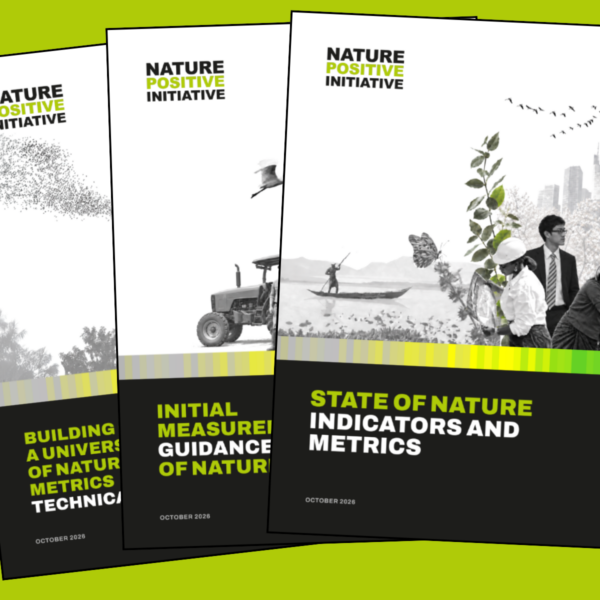
- The State of Nature Indicators and Metrics led by the Nature Positive Initiative and partners provide a common science-based and practical universal set of indicators and metrics for measuring the state of nature that can be used across relevant corporate nature use cases.
Together, these developments will enable organisations to take a consistent, science-based approach to assessing and measuring the state of nature, while helping them connect assessment, target-setting, action and disclosure more effectively.
The releases come ahead of CBD COP17 in Yerevan, Armenia later this month and will further support and enable governments to move towards full implementation of Target 15 of the Kunming-Montreal Global Biodiversity Framework agreed in 2022 at COP15. Target 15 calls for governments to introduce requirements for large and transnational companies and financial institutions to assess, monitor and transparently disclose their biodiversity-related risks, dependencies and impacts, making credible corporate action an important part of the wider implementation agenda.
Eva Zabey, CEO, Business for Nature, said:
“Turning the Global Biodiversity Framework into real-world action requires businesses and governments to move in the same direction. The growing alignment between TNFD, SBTN and the Nature Positive Initiative is a positive sign that the nature landscape is becoming more coherent and easier for companies to navigate. As countries prepare for COP17, this can help build confidence, support implementation of Target 15, and accelerate the credible business action needed to help achieve the Framework’s goals.”
Tony Goldner, CEO, Taskforce on Nature-related Financial Disclosures (TNFD), said:
“The market has moved quickly in recent years, with thousands of organisations now working to understand and respond to their nature-related issues. As implementation accelerates, it is essential that assessment, target-setting and reporting approaches work together in a practical and mutually reinforcing way. The enhanced alignment between TNFD and SBTN, supported by the State of Nature Indicators and Metrics, will help organisations build on existing work and draw on a common foundation for measuring the state of nature. These developments represent an important step towards making corporate action on nature more practical, coherent and scalable.”
Erin Billman, CEO, Science Based Targets Network (SBTN), said:
“For companies, alignment only matters if it helps them move faster and with more confidence. Stronger alignment between TNFD and SBTN, supported by the Nature Positive Initiative’s common metrics foundation, helps companies connect how they understand and report on nature with science-based target-setting. Science-Based Targets for Nature 2.0 turns that connection into a practical route to set validated targets and implement them, while maintaining the rigor and place-based approach that credible action requires.”
Marco Lambertini, Convener, Nature Positive Initiative, said:
“The State of Nature Indicators and Metrics, launched today by the Nature Positive Initiative and already integrated into the frameworks of TNFD and SBTN, provide a much-needed common way for businesses, investors and other actors to measure nature-related, dependencies, impacts, risks and opportunities across their operations and supply chains. The framework strikes the balance between being scientifically rigorous but also practical and decision-useful. It is the result of the consensus built across a wide range of experts, users and other stakeholders – and it is designed to measure in a comparable way whether an organization’s actions are improving the state of nature and strengthening its own resilience. It fills a major gap and represents a critically important foundation for consistency in state of nature measurement across geographies, users and use-cases.”
TNFD, SBTN and the Nature Positive Initiative will host two joint launch webinars today to explain how the updates connect in practice and what they mean for businesses and financial institutions. Registration details are included below in Notes to Editors.
Media enquiries
For more information, comments or interviews, please contact:
- TNFD: Rita Lockheart (rita.lockheart@tnfd.global)
- SBTN: Arabella Stickels (arabella@sbtnetwork.org)
- Nature Positive Initiative: Emily McCoy (emmcoy@naturepositive.org) or Gemma Parkes (gparkes@naturepositive.org)
–ENDS–
NOTES TO EDITORS
TNFD-SBTN-NPI webinars
Register via the links below to learn more about these key updates being published (choose from two options covering different time zones):
- 13 October at 09:00-10:00 BST or 16:00-17:00 BST
About TNFD’s LEAP 2.0
To support organisations with the process of assessing and disclosing their nature-related issues, the TNFD developed the LEAP approach and associated guidance for corporates and financial institutions over a two-year period between 2021 and 2023. Through an open innovation process, involving three beta releases and extensive market feedback and pilot testing, thousands of individuals and organisations around the world played a key role in designing and testing LEAP, ensuring it was both science-based and practical to undertake.
LEAP has become the preferred tool for assessing nature-related dependencies, impacts, risks and opportunities for thousands of organisations globally. The LEAP approach moves users through four phases – Locate, Evaluate, Assess and Prepare – which help an organisation understand where its interface with nature exists, evaluate its dependencies and impacts on nature, assess the ensuing nature-related risks and opportunities to its organisation and, finally, prepare its public nature-related disclosures and other actions the organisation may wish to take.
In the first upgrade of LEAP since its v1.0 release in September 2023 alongside the TNFD recommendations, the TNFD has integrated a number of updates and improvements to LEAP based on market feedback. The most significant updates are the incorporation of:
- State of nature measurement to support the evaluation of dependencies and impacts;
- Considerations of environmental crime;
- New guidance on invasive alien species measurement;
- More guidance on risk assessment and nature-related opportunities;
- Further guidance for assessments of financial institutions’ portfolios; and
- Considerations of nature in transition planning and landscape and seascape approaches.
Tomorrow, 14 October, TNFD will host a separate webinar focused on all LEAP v2.0 updates. Register for session 1 here and session 2 here.
TNFD’s LEAP v2.0 can be found here.
About SBTN’s Science-Based Targets for Nature 2.0
Science-Based Targets for Nature 2.0, from SBTN, marks the next phase in corporate target-setting. The updated methods make the journey more practical for companies, with more flexible ways to get started and progress, broader target coverage and new implementation resources — while maintaining the rigor, accountability and place-based approach that underpin credible action on nature.
The release builds on years of scientific development, public consultation, NGO and partner input, and lessons from companies applying SBTN’s methods in practice. It responds to a clear need heard across the market: companies want to act on nature, but need clearer routes to begin, progress and connect existing sustainability work to science-based targets and action.
More ways to begin and progress. New and updated pathways give companies more options depending on readiness, data and traceability, including focused scopes, supplier engagement targets and stepwise validation.
Broader freshwater and land coverage. Freshwater updates strengthen the approach to groundwater and expand freshwater quality coverage to pesticide-related impacts, while land methods expand routes for working land regeneration and restoration and for sectors including mining, infrastructure, construction and extractives.
Practicality without compromise. Greater flexibility does not mean lowering the bar. Place-based science is strengthened and independent validation and transparent disclosure remain central to SBTN’s approach.
Stronger connections across corporate nature work. 2.0 is designed to connect target-setting more effectively with related assessment, disclosure and transition-planning processes, helping companies build from work already underway rather than treating science-based targets as a separate exercise.
More support for implementation. New resources help companies move from target-setting into action planning and begin translating targets into practical implementation.
A more stable basis for long-term application. The release provides a more stable basis for companies to apply SBTN’s methods with confidence. Outside of the forthcoming Ocean update, SBTN expects future development to focus primarily on targeted refinements, enabling guidance and supporting tools rather than further major revisions.
Explore Science-Based Targets for Nature 2.0 here.
About the State of Nature Indicators and Metrics, Nature Positive Initiative
The State of Nature (SoN) Indicators and Metrics, launched today by the Nature Positive Initiative, equip businesses and investors with common metrics to measure the state of nature to help understand dependencies, impacts, risks and opportunities.
- Wide consensus: More than 500 diverse experts and practitioners contributed to a two-year global process to establish a common approach to measuring changes in the state of nature, with a primary focus on the private sector – to help understand nature-related dependencies, impacts, risks and opportunities – approved by the 27 core member organizations of the Nature Positive Initiative.
- Science-based and practical: The framework has been developed with the objective of identifying a minimum set of indicators and metrics that are scientifically rigorous, practical to use, accessible to a broad range of organizations and suitable for being embedded consistently across standards, frameworks and reporting systems.
- Simplification and interoperability: The proliferation of metrics available to date, while adding sophistication to the way we measure nature, has led to confusion, inconsistency and inaction. A review of the more than 600 existing state of nature metrics has been distilled into four core indicators with associated metrics for site and landscape, covering ecosystem extent, ecosystem condition, species extinction risk and species populations.
- Tested in the real world: The framework was piloted by 29 companies across 6 key sectors in more than 50 sites in 23 countries, complemented by site-specific feasibility assessments with companies in the marine and freshwater realms.
- Integrated in leading frameworks: Leading corporate nature-related guidance frameworks including TNFD and SBTN have integrated the indicators and metrics, helping create greater consistency and interoperability for businesses and financial institutions, with GRI also moving towards integration.
- Explore the new State of Nature Indicators and Metrics and associated materials here.
Sign up to our newsletter
You may
Also like...
-

Dozens of leading organizations across sectors welcome State of Nature Indicators and Metrics
Support reflects the deep engagement of a two-year process of consultation and consensus-building as well as the growing market demand for credible and practical tools to support businesses in transitioning towards nature-positive practices.
naturepositive.org -
Landmark universal State of Nature Indicators and Metrics equip businesses and investors in understanding their nature-related dependencies, impacts, risks and opportunities
The Nature Positive Initiative today launched a landmark new set of indicators and metrics for measuring the state of nature
naturepositive.org -

Nature Positive Initiative events at UN CBD COP17
More than a dozen Nature Positive Initiative events to take place across the two-week conference, with a focus on how measurement can build business resilience, accelerate action and ultimately halt and reverse nature loss.
naturepositive.org