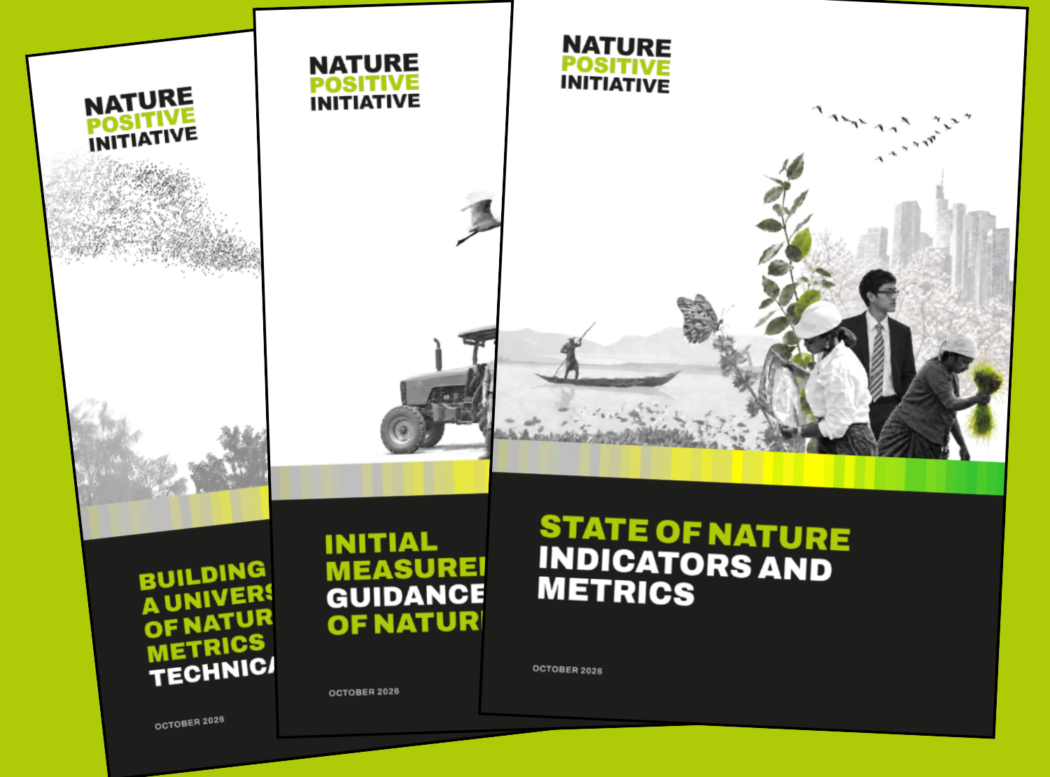
- Wide consensus: More than 500 diverse experts and practitioners contributed to a two-year global process to establish a common approach to measuring changes in the state of nature, with a primary focus on the private sector – to help understand nature-related dependencies, impacts, risks and opportunities – approved by the 27 core member organizations of the Nature Positive Initiative.
- Science-based and practical: The framework has been developed with the objective of identifying a minimum set of indicators and metrics that are scientifically rigorous, practical to use, accessible to a broad range of organizations and suitable for being embedded consistently across standards, frameworks and reporting systems. It complements rather than replaces pressure and response metrics.
- Simplification and interoperability: The proliferation of metrics available to date, while adding sophistication to the way we measure nature, has led to confusion, inconsistency and inaction. A review of the more than 600 existing state of nature metrics has been distilled into four core indicators with associated metrics for site and landscape, covering ecosystem extent, ecosystem condition, species extinction risk and species populations.
- Tested in the real world: The indicators and metrics were piloted by 29 companies across 6 key sectors in more than 50 sites in 23 countries, complemented by site-specific feasibility assessments with companies in the marine and freshwater realms.
- Integrated in leading frameworks: Leading corporate nature-related guidance frameworks including TNFD and SBTN have integrated the indicators and metrics, helping create greater consistency and interoperability for businesses and financial institutions, with GRI also moving towards integration.
- Explore the new State of Nature Indicators and Metrics here, associated Guidance here and Report here.
London, UK, 13 October 2026 – The Nature Positive Initiative today launched a landmark new set of indicators and metrics for measuring the state of nature, marking a major step forward in the global effort to halt and reverse biodiversity loss and secure business resilience: the State of Nature (SoN) Indicators and Metrics.
Developed through a two-year, international consensus-building process involving more than 500 experts and practitioners from business, finance, science, civil society and governments, the new State of Nature Indicators and Metrics establish, for the first time, a globally aligned minimum set of measurements for assessing changes in the state of nature. Measuring the state of nature is essential because it tells us whether our pressure and response actions are having the desired effect.
The State of Nature Indicators and Metrics respond to one of the most significant barriers to action on biodiversity: the absence of a common approach for measuring whether efforts to protect and restore nature are actually delivering an absolute improvement in the state of nature. The framework does not intend to monitor nature per se; it is designed to help organizations – with a primary focus on companies and financial institutions – assess their nature-related dependencies, impacts, risks and opportunities. This is essential for private sector organizations to ensure they are securing their business against ever-mounting nature-related shocks and contributing to nature’s recovery.
“Nature underpins our economies, our health, our food and water systems, a stable climate and the resilience of businesses and communities worldwide. Yet until now there has been no clear consensus on how to measure whether efforts are leading to nature’s recovery,” said Marco Lambertini, Convener, Nature Positive Initiative. “The State of Nature Indicators and Metrics plug a critical gap. They provide a practical, science-based, decision-useful and universally applicable way for businesses, financial institutions and other actors to understand their nature-related dependencies, impacts, risks and opportunities and, most importantly, to assess whether their actions are helping to put nature on a path to recovery while building their own resilience.”
“If you want to continue to create the prosperity humanity needs, we need to be able to use nature in a way that is sustainable. The best way to do this is to actually start to measure it. The State of Nature Indicators and Metrics provide a means to do so,” said André Hoffmann, Vice Chairman of Roche, Co-Chair of the World Economic Forum and Co-Founder of InTent.
A practical framework for a complex challenge
Following extensive technical review of more than 600 existing state of nature metrics and indices, wide stakeholder consultation and real-world testing, consensus has centred on four core indicators that together provide a holistic picture of the state of nature:
- Ecosystem Extent → Are ecosystems expanding or shrinking?
- Ecosystem Condition → Is ecosystem condition improving or declining?
- Species Extinction Risk → How important is the area to overall species extinction risk?
- Species Populations → How healthy are the species populations present?
The indicators and their underlying metrics are designed to be applied across terrestrial, freshwater and marine environments, supported by practical measurement guidance at both site and landscape or seascape scale.
In practice, this might mean, for example, a company assessing a landscape within which they source raw materials and looking at whether natural habitat is expanding or shrinking, ecosystem condition is improving, extinction risk is changing and species populations are recovering. This in turn would support their broader approaches to managing risk, ensuring supply chain resilience, returns on investment and simplifying nature-related reporting.
The framework is aligned with the goals and ambitions of the Kunming-Montreal Global Biodiversity Framework, adopted by 196 countries in 2022, and is intended to support implementation of nature-related initiatives and reporting frameworks across the global economy.
Building consensus across sectors and geographies
The new framework is the result of one of the most extensive collaborative efforts undertaken to date in the nature measurement space. The process included the review of more than 600 existing state of nature metrics, multiple rounds of technical workshops and expert focus groups, two global public consultations, piloting by 29 companies from different sectors across more than 50 sites in 23 countries, freshwater and marine feasibility assessments, and input from more than 500 experts and practitioners.
The final indicators and metrics descriptors have been approved by the 27 core members of the Nature Positive Initiative, including the world’s most influential sustainable business platforms, standard-setting organizations and nature conservation organizations, as well as academia, Indigenous and local governments networks.
Technical partners who worked with the Nature Positive Initiative to develop the framework to this initiative included EY, The Biodiversity Consultancy, the World Economic Forum, the Ocean Risk and Resilience Action Alliance and a dedicated technical working group of the 27 Nature Positive Initiative core members. Throughout the process, the objective remained clear: identify a minimum set of indicators and metrics that are scientifically rigorous, practical to use, accessible to a broad range of organizations and suitable for being embedded consistently across standards, frameworks and reporting systems.
Early adoption announced by leading sustainability frameworks
Growing demands from investors, regulators, customers and society mean organizations increasingly need robust evidence of their dependencies and impacts on nature. Until now, the diversity of available state of nature metrics – while adding sophistication to the way we measure nature – has often created confusion, inconsistency and inaction. Findings in a recent market survey published in the Taskforce on Nature-related Financial Disclosure (TNFD)’s 2026 Status Report strongly highlight market demand for standardized metrics. The new State of Nature Indicators and Metrics provide a common framework for measuring nature-related outcomes.
Demonstrating the critical need for interoperability across the nature measurement space, several leading frameworks are now adopting the State of Nature Indicators and Metrics consistently. TNFD has today announced that the metrics have been integrated within its framework. The International Sustainability Standards Board (ISSB) has drawn from TNFD material on nature-related risks and opportunities to develop its upcoming Exposure Draft on Nature-related disclosures, due for launch next week. The proposals are intended to support the implementation of the requirement in IFRS S1 to disclose material information about nature-related risks and opportunities. The Science Based Targets Network (SBTN) has integrated the metrics within Science-Based Targets for Nature 2.0, helping companies use a consistent state of nature measurement basis as they assess and prioritize action on nature. The Multilateral Development Banks (MDBs) Nature Working Group is referencing these metrics through their latest guidance to measure, track and compare the real-world impact of nature and development financing. The State of Nature Indicators and Metrics will be integrated into WBCSD’s Nature Action Portal by the end of 2026, and can be used to support disclosures under the European Sustainability Reporting Standards (ESRS) E4 Standard.
“A common framework for measuring state of nature outcomes is a critical step forward for the market. Corporates and financial institutions depend on resilient ecosystems and healthy species, yet consensus on how business can track changes in the state of nature has been limited. The Nature Positive Initiative’s metrics and measurement guidance provides that shared foundation for measuring state of nature outcomes. By aligning around common indicators and metrics, together we can accelerate progress towards the global nature-positive goal grounded in credible, science-based measurement,” said Tony Goldner, CEO, Taskforce on Nature-related Financial Disclosures (TNFD).
“The State of Nature Indicators and Metrics create greater consistency in how the state of nature is measured across corporate nature approaches. By aligning SBTN’s methodology with it, we’re helping companies apply a common measurement foundation to target-setting and credible action through science-based targets for nature,” said Erin Billman, CEO, Science Based Targets Network (SBTN).
Supporting business action and resilience disclosure, target-setting and reporting
The metrics are designed to be decision-useful and to support corporate and financial institutions in achieving greater consistency in assessing nature-related risk, performance and capital allocation – and ultimately greater stability and resilience. They facilitate reporting, disclosure, target-setting and performance tracking, and are designed to be integrated to fill a key gap in existing frameworks, standards and decision-making processes, rather than forming an additional standalone standard.
“The launch of the State of Nature Indicators and Metrics is an important step toward a shared understanding of how to measure, track and respond to changes in nature. GRI has been pleased to partner with the Nature Positive Initiative in developing and testing these metrics, including their use alongside the GRI Standards. We look forward to building on this work to support greater consistency across nature measurement and reporting, and stronger accountability for biodiversity impacts,” said Robin Hodess, CEO, Global Reporting Initiative (GRI).
“Businesses increasingly recognize that understanding their impacts and dependencies on nature is essential for managing risk and building resilience. By aligning around a practical set of State of Nature metrics, the Nature Positive Initiative is helping create greater consistency in measuring nature outcomes. WBCSD is proud to have contributed to this effort and sees the Framework as an important building block for improving nature-related measurement,” said Peter Bakker, President and CEO, World Business Council for Sustainable Development.
A call for adoption and engagement
Organizations that promote standards and guidance are encouraged to adopt and embed these metrics where appropriate in order to increase interoperability and comparability, and ultimately to make things easier for users. In addition, there remains an important need for continued collaboration to improve nature data, accessibility and measurement tools. Governments, data providers, academia, technology developers, standards setters and businesses are urged to work together to fill remaining gaps and improve access to biodiversity data, develop automated measurement tools and build capacity for organizations with limited technical resources. The Measurement Guidance and Technical Output Report accompanying the State of Nature Indicators and Metrics are intended to be evolving documents and already highlight some key research questions that will improve the efficiency and robustness of nature measurement. In November 2025, a group of organizations at the forefront of promoting a sustainable economy announced plans to develop a Nature Measurement Protocol in order to further standardize nature measurement methodologies.
The launch of the State of Nature Indicators and Metrics comes at a critical moment. With less than four years remaining until the expiry of the global target of halting and reversing nature loss by 2030, 196 governments will gather in Yerevan, Armenia at UNCBD COP17 on 19-30 October to discuss progress towards this mission, and bolster efforts to prioritize nature-positive action.
“The State of Nature Indicators and Metrics report released today can be immensely valuable for the Convention on Biological Diversity and aligning efforts to the Kunming-Montreal Global Biodiversity Framework. As we go into a global review at COP17 and gear up to accelerate progress on the Framework’s implementation towards 2030, we need these efforts and actors more than ever,” said Astrid Schomaker, Executive Secretary, UN Convention on Biological Diversity.
“The business case is clear, the knowledge and tools are increasingly available, and we now have consensus on metrics,” said Lambertini. “There can be no more delay in addressing the decline of nature and the impacts this is having on the economy, society and individual organizations. The next step is measurable action. We urge all businesses and financial institutions to begin their nature-positive journey by using these State of Nature Indicators and Metrics, for their own resilience as well as that of the wider economy and society.”
Media enquiries
For more information, comments or interviews, please contact:
- Emily McCoy, emmcoy@naturepositive.org, +44 7389 819301
- Gemma Parkes, gparkes@naturepositive.org, +41 79 253 6386
Notes to editors
- The State of Nature Indicators and Metrics and supporting material will be available from 13 October 2026: https://www.naturepositive.org/metrics/
- Join an informative launch webinar today (13 October) co-hosted by the Nature Positive Initiative, TNFD and SBTN to learn more and find out how the State of Nature Indicators and Metrics are being integrated in leading corporate nature processes.
Register below to learn more about these key updates being published (choose from two options covering different time zones):
- Webinar 1: 13 October at 09:00-10:00 GMT – register here
- Webinar 2: 13 October at 16:00-17:00 GMT – register here
About the Nature Positive Initiative (naturepositive.org)
The Nature Positive Initiative is a diverse alliance of 27 of the world’s largest nature conservation organizations, sustainable business platforms, standard-setting organizations, academia, Indigenous and local governments networks to preserve the integrity, align on guidance and support the implementation of the Nature Positive global goal for nature. The 27 core members are: African Natural Capital Alliance (ANCA); BirdLife International; Business for Nature (B4N); Campaign for Nature; Capitals Coalition; Climate Champions; Conservation International (CI); Global Commons Alliance (GCA); Global Reporting Initiative (GRI); ICLEI – Local Governments for Sustainability; International Indigenous Forum on Biodiversity (IIN); InTent; International Union for Conservation of Nature (IUCN); Nature4Climate (N4C); NatureFinance; Nature Positive Universities; The Pew Charitable Trusts; Potsdam Institute for Climate Impact Research (PIK); Science Based Targets Network (SBTN); The Nature Conservancy (TNC); Taskforce on Nature-related Financial Disclosures (TNFD); UN Principles for Responsible Investment (PRI); World Business Council for Sustainable Development (WBCSD); World Commission on Protected Areas (WCPA); Wildlife Conservation Society (WCS); World Resources Institute (WRI); and World Wide Fund for Nature (WWF).
The Nature Positive Initiative is backed by the Nature Positive Forum, more than 500 organizations and institutions that have committed to uphold the definition of Nature Positive by 2030 and pursue action to secure a nature positive world.
The Initiative brings together voices from around the world, across a variety of sectors and stakeholder groups, to call for accelerated action on the UN Convention on Biological Diversity (CBD) Global Biodiversity Framework. In particular, it seeks to establish and unify everyone behind a common definition of Nature Positive and drive action towards nature-positive outcomes.
SUPPORTING QUOTES
Peter Thomson, UN Secretary-General’s Special Envoy for the Ocean and Co-Chair, Friends of Ocean Action, said:
“The blue economy is a burgeoning source of livelihoods and wellbeing for communities around the world, but its impacts can be damaging, and its many dependencies on nature in the ocean are often opaque. For this reason, the new consensus on measuring nature positive outcomes is a welcome step forward. For done right, it will ensure the blue economy develops sustainably – in an Ocean Positive way. I join with those encouraging its adoption by the private sector.”
Paul Polman, business leader, investor, philanthropist, said:
“Nature-positive ambition will remain rhetorical unless we can measure whether nature is actually recovering. This Framework gives business, finance, and policymakers a common language to move beyond disclosure and hold themselves accountable for real-world outcomes.”
Johan Rockström, Director, Potsdam Institute for Climate Impact Research, said:
“At a time when humanity has crossed multiple planetary boundaries, threatening people, economies and the resilience of the planet, this universal, credible and accessible framework provides a way to measure whether biodiversity is recovering. It will equip actors to assess their overall impact, sharpen their strategies to halt and reverse biodiversity loss, strengthen their own resilience, and help keep society and the economy within a safe operating space.”
STANDARDS AND GUIDANCE FRAMEWORKS
Scott McCready, Chief Strategy Officer and Acting CEO, Alliance for Water Stewardship, said:
“Healthy freshwater ecosystems and biodiversity are one of the key intended outcomes of the AWS Standard V3.0. The State of Nature Indicators and Metrics Framework is an important resource and will support users of the AWS Standard V3.0, including members of our alliance, to protect, conserve and restore freshwater ecosystems and biodiversity in catchments around the world.”
Mark Gough, CEO, Capitals Coalition, said:
“Through the Nature Positive Initiative, we see the value of collaborative action. Now, with the State of Nature metrics, we have a consistent and manageable framework for tracking changes in nature.“
Dr. Sue Armstrong-Brown, Director of Thought Leadership, CDP, said:
“CDP welcomes the publication of the NPI State of Nature Metrics. Measuring and disclosing an organisation’s relationship with nature is fundamental to reducing impacts and building resilience. CDP surfaces how organisations respond to these relationships; the State of Nature metrics can now help measure the results on the ground in a standardised, comparable way.”
Pedro Faria, Environmental Director, EFRAG, said:
“Creating a shared understanding of how to measure the state of nature is an important step towards achieving nature-positive outcomes. This initiative brings together valuable knowledge and perspectives from a diverse range of stakeholders, providing greater clarity, consistency and alignment in the use of relevant metrics. The EFRAG Secretariat welcomes this initiative as an important contribution to addressing nature-related impacts. The metrics can also help inform disclosures under the ESRS, where material.”
Subhra Bhattacharjee, Director General, Forest Stewardship Council, said:
“For humanity to thrive, nature needs to recover and thrive. The State of Nature Indicators and Metrics Framework is a critical tool for us to measure and monitor our progress in restoring nature and rebuilding its resilience. For FSC, that matters because forests sit at the heart of the Nature Positive agenda, and metrics can show where responsible forest management is delivering gains for biodiversity and people.”
Silvio Dulinsky, ISO Deputy Secretary-General, said:
“Robust metrics and meaningful measurement are essential for credible, effective and long-term action. As organizations seek to understand and address their impacts on nature, common approaches and reliable information will be vital for informed decision-making. We see strong potential to build on this work through the ISO system and international standards, and look forward to continued engagement with the Nature Positive Initiative as efforts in this area evolve.”
BUSINESS ASSOCIATIONS
Eva Zabey, CEO, Business for Nature, said:
“Accelerating and scaling action for nature requires a shared understanding of what success looks like and how it can be measured. The State of Nature Indicators and Metrics Framework represents an important step towards greater consistency, credibility and accountability, helping companies navigate complexity and translate ambition into measurable outcomes for nature.”
Anita de Horde, Co-founding Executive Director, Finance for Biodiversity Foundation, said:
“The launch of the State of Nature Indicators and Metrics Framework is an important step towards a consistent and practical approach to measuring changes in the state of nature. For financial institutions, greater alignment around a core set of indicators and metrics can help them better understand, track and plan nature-related outcomes linked to their financing activities. At Finance for Biodiversity Foundation, we fully support this collaborative effort and look forward to helping drive its uptake across the financial sector.”
Marcelo Hidalgo, COO, Fishing Industry Association of Papua New Guinea, said:
“The Marine State of Nature Metrics, ‘From Ocean Action to Nature Outcomes’, helped us to zoom out on our fishing operation with 55 tuna purse seiners and the impact on the ocean by informing an impact mitigation strategy, demonstrating responsible fishing practices and supporting voluntary environmental disclosures. We expect investors to value our transparency and accountability; the TNFD provides a rigorous framework for investors to evaluate our fishing operation and assess whether our long-term assets are sustainable.”
Rohitesh Dhawan, President and CEO, ICMM, said:
“Achieving a nature-positive future requires not only ambition but also a credible, shared understanding of how we measure progress. The Nature Positive Initiative’s State of Nature metrics represent a significant advance in providing a common, science-based approach for assessing nature outcomes. We are pleased that several ICMM members contributed to the pilot programme, helping shape a framework that is robust and practical to apply in real-world settings.”
Ross Hampton, CEO, ISFC, said:
“>Nature measurement is a crucial albeit highly complex topic, which was a foundational reason for ISFC’s Forestry Natural Capital project. The State of Nature Indicators and Metrics Framework represents a significant step forward in ensuring a more practical, consistent approach – one ISFC looks forward to engaging with as we continue our own efforts in support of nature-positive outcomes across the sector.“
PRIVATE SECTOR
Alexis Gazzo, Global Climate Change and Sustainability Services Leader, EY, said:“EY is proud to have supported the development of the State of Nature Indicators and Metrics, an important step toward greater alignment in how nature outcomes are measured and managed. As better data and clearer frameworks become available, organizations can understand their exposure and act with greater confidence. The opportunity now is to turn insight into decisions that strengthen resilience, stimulate innovation and create lasting value for businesses, society and the natural systems on which they depend.”
Carmen Díaz Canabal, Chief People and Sustainability Officer, Holcim, said:
“Standardized state-of-nature metrics are essential to turn ambition into measurable impact. Through our pilot with the Nature Positive Initiative and IUCN, we demonstrated how practical tools like BIRS can help measure biodiversity progress, inform better decisions, and guide action that benefits both nature and local communities.”
Agustín Delgado, Chief Innovation and Sustainability Officer, Iberdrola, said:
“Achieving Nature Positive outcomes requires more than ambition. It requires a shared understanding of how we measure changes in nature. For Iberdrola, the State of Nature Indicators and Metrics Framework is a major step forward because it provides a common approach to assessing ecosystem condition, one of the key dimensions of our Biodiversity Plan. The Framework helps improve comparability, transparency and, ultimately, better decision-making for nature.”
Hiroaki Takaoka, Senior Executive Officer, Corporate Strategy & CSV Strategy, Kirin Holdings Company, Limited, said:
“Nature underpins Kirin’s business, and its stewardship is fundamental to sustainable growth. The State of Nature Indicators and Metrics Framework offers a rigorous, science-based approach to embedding nature-related change into decision-making. Through both the terrestrial pilot and freshwater assessment, we have seen its potential to enhance accountability, inform capital allocation, and translate nature-positive action into enduring value for business and society.”
Graeme Sumner, CEO, Lyttelton Port Company, said:
“At Lyttelton Port Company, we have had a biodiversity positive ambition since 2015. However, without credible and consistent ways to measure the state of nature where we operate, achieving this goal was difficult. As one of the piloting organisations, we are happy to be incorporating the metrics into our Biodiversity Strategy to track progress towards our biodiversity positive ambition.”
Benjamin Ware, Global Head of Climate and Responsible Sourcing, Nestlé, said:
“At Nestlé, we see practical, consistent measurement as key to accelerating action for nature. The State of Nature Indicators and Metrics Framework provides a common basis to create baseline, track impact like for like, and align businesses for a level playing field. We welcome this milestone as a step toward measurable outcomes for nature at scale.”
Anders Enghild, Head of Global Sustainability, Ørsted, said:
“While we are seeing strong progress on nature commitments, there is still a need for greater alignment across metrics and methodologies. That is important to compare progress across sectors. We see the State of Nature framework as an important contribution to this alignment and to helping define how new technologies can deliver better outcomes for nature.”
Esther Finidori, Chief Sustainability Officer, Schneider Electric, said:
“We were proud to contribute to the Nature Positive Initiative pilot and support the development of a common framework for measuring nature outcomes, which can strengthen transparency, accountability and collective progress.”
Malu Pinto, Chief Sustainability Officer, Suzano, said:
“We believe that better outcomes for nature depend on accurate information, and that developing a common language for measuring nature is essential to accelerating meaningful action. Through the pilot, we explored how state of nature metrics can support decision-making across forestry operations and landscapes, providing a practical foundation for more consistent and credible nature measurement and helping to strengthen long-term business resilience.”
Malcolm Starkey, Chief Innovation Officer, The Biodiversity Consultancy, said:
“Reaching consensus on a set of metrics that are simple enough for businesses to use, broad enough to capture meaningful ecological insight, and genuinely useful for decision-making is a remarkable and hard-won achievement. NPI’s shared, minimum set of indicators gives companies a clear, comparable way to understand their interactions with nature and the confidence to start measuring and improving.”
Dr. Dirk Voeste, Chief Sustainability Officer, Volkswagen Group, said:
“Businesses increasingly need applicable and credible approaches to assess nature-related impacts and risks. The State of Nature Indicators and Metrics Framework provides a valuable foundation by providing greater consistency and alignment to the landscape of metrics. Volkswagen Group is proud to have contributed to the piloting process and welcomes this important milestone towards a more harmonized approach to measuring nature outcomes”
MULTILATERAL DEVELOPMENT BANKS
Adonai Herrera-Martínez, Director, Environment and Sustainability, European Bank for Reconstruction and Development (EBRD), said:
“The biodiversity crisis demands immediate, coordinated action from all socio-economic actors. These four core indicators are a way to distill nature’s complexity and should empower stakeholders – banks, corporates, governments and civil society – to catalyse action for nature recovery, mitigating risks and seizing opportunities. Nature and future generations deserve no less.”
Eva Mayerhofer, Head of Policy Implementation Unit and Lead Biodiversity Specialist, Sustainability and Climate Office, European Investment Bank (EIB), said:
“Nature metrics have been instrumental in shaping the EIB’s impact pathways, providing the evidence needed to demonstrate how investments in nature contribute to economic competitiveness, strengthen resilience and security, and foster more inclusive and prosperous societies.”
Gregory Watson, Chief of the Biodiversity and Natural Capital Unit (BNC), Inter-American Development Bank (IADB), said:
“The State of Nature Indicators and Metrics Framework provides a practical and consistent foundation for measuring changes in nature. The MDBs’ Guide on Nature Metrics incorporates Nature Positive Initiative’s state indicators, which we piloted across IDB Group operations. This experience confirmed their value in demonstrating ecological outcomes derived from activities and how that, in turn, generates decision-useful information for investors. Trusted metrics build confidence, scale nature finance and unlock investment.”
NGOs, NONPROFITS AND DATA PROVIDERS
Dorothy Maseke, Head of Secretariat, African Natural Capital Alliance, said:
“The State of Nature Indicators and Metrics Framework is an important step towards turning nature-positive ambition into measurable action, and we are pleased to have contributed to its development. For African financial institutions, practical, streamlined and consistent metrics are essential. Global consensus and alignment with frameworks such as TNFD can strengthen accountability, identify opportunities and help mobilize capital towards nature-positive outcomes across Africa, a continent of immense natural wealth and promise.”
Martin Harper, CEO, BirdLife International, said:
“The launch of the State of Nature Indicators & Metrics Framework marks a pivotal step for nature positive action, providing a consistent way to track and measure real-world outcomes. BirdLife International is proud to have piloted it with our corporate partners Rio Tinto, Sibelco, Heidelberg Materials, and Schneider Electric, and we’ll put it to work in our conservation efforts, including protecting the world’s migratory Flyways.”
Brian O’Donnell, Director, Campaign for Nature, said:
“The release of the nature metric framework is a major milestone in advancing a Nature Positive agenda for the world. Clear, defensible and measurable contributions to halting and reversing biodiversity loss are essential, and this science-based framework fills that need. Significant work went into development of these metrics and Campaign for Nature enthusiastically welcomes this essential step.”
Dan Ioschpe, COP30 Climate High-Level Champion, said:
“Nature-positive action will only deliver the change we need if progress can be measured in a way that is credible, practical and consistent. This Framework marks a fundamental step forward: transforming a complex terrain into a focused set of core indicators that businesses, financial institutions and other actors can apply across sites and landscapes. An instrumental part of the 5-Year Vision of the Global Climate Action Agenda, this greater alignment and simplicity reduces barriers to action, helping ensure that efforts to halt and reverse nature loss translate into implementation on the ground.“
Joe Miller, Executive Secretary, Global Biodiversity Information Facility (GBIF), said:
“GBIF shares the Nature Positive Initiative’s goal of strengthening the data, metrics and indicators used to measure our collective efforts to bend the curve on biodiversity loss. We welcome the opportunity to align with the Nature Positive community and help create a virtuous circular data economy that simultaneously supports better corporate data exchange, reporting and disclosure.”
Yana Gevorgyan, Convener, Global Ecosystems Atlas and Director of Secretariat, Group on Earth Observations, said:
“Bringing hundreds of competing metrics down to four indicators the whole nature-positive community can stand behind is a real achievement of consensus. The Global Ecosystems Atlas is building the ecosystem maps to help calculate the metrics so that any company, investor or country can apply them. We need to use these metrics to meet the ultimate goal here: reversing the loss of nature.”
Kimberly Mathisen, CEO, HUB Ocean, said:
“Nature cannot wait for perfect data. One of the greatest strengths of this Framework is its focus on practical, scientifically robust indicators that organisations can begin using today. By creating a common foundation for measuring nature outcomes, it helps move the conversation from ambition to implementation and action.”
Grethel Aguilar, Director General, IUCN, said:
“IUCN is delighted to celebrate the launch of the Nature Positive Initiative’s State of Nature Indicators and Metrics Framework. We commend the NPI team for their leadership in bringing together diverse expertise and perspectives to build consensus around how we measure the state of nature. IUCN is proud to have contributed to this important process, and through approaches such as RHINO, to help translate ambition into credible, high-integrity nature-positive outcomes.”
Daniel Hooft, CEO, Kelp Blue, said:
“Kelp Blue joined the marine feasibility assessment to test the State of Nature metrics at our kelp farm in Lüderitz, Namibia. The framework gives ocean businesses a common language to measure the ecosystems and species around their operations, track change over time, and share credible evidence with buyers, investors and regulators. It is an important step from ocean action to measurable nature outcomes.”
Sari Tolvanen, CEO / Founder, Ocean Eye Conservation, said:
“The State of Nature Metrics provide clear, practical guidance for the marine tourism sector on how to set up, measure and report on nature and community positive impact. While this can feel like a complex undertaking, the step-by-step framework with actionable tools, templated and worked examples, can make it achievable for any operators who care about the future of their business and the planet. Ocean Eye works alongside responsible tourism operators and provides a digital data collection and financial incentive platform that can contribute to these nature-positive goals.”
Karen Sack, Executive Director, ORRAA, said:
“A resilient and net zero world is not possible without a healthy, regenerating ocean. Investors require reliable data and standardised metrics to assess risk and verify outcomes. Likewise, financial institutions need the ability to translate complex ecological dynamics into investable decisions. Metrics and other enabling conditions are key structural building blocks for a functioning capital market for the Ocean. The launch of this framework marks a great step in the right direction, toward ocean positive investment.”
Alfredo Giron, Head of Ocean, World Economic Forum, said:
“There is growing ambition to act for nature among our marine sector partners, but activity alone does not tell us whether nature is recovering. The State of Nature Metrics provide a shared way to measure real changes in ecosystems and species in marine environments and beyond. This focus on outcomes helps businesses and investors take credible action and direct capital towards improved ocean health, contributing to the global goal of a nature-positive future.”
Ani Dasgupta, President and CEO, World Resources Institute, said:
“We’ve set ambitious goals to protect and restore nature. Now we need to know whether we’re delivering. The Nature Positive Initiative’s new State of Nature Indicators and Metrics Framework provides a practical way to track progress, identify where we’re falling short and direct resources where they can have the greatest impact. WRI is proud to have contributed to its development through NPI’s participatory process. The exciting work begins: putting these tools to work so that governments, businesses and communities can turn commitments into measurable results.”
Kirsten Schuijt, Director General, WWF International, said:
“Around the world, we are seeing growing evidence that nature can recover when the right actions are taken at scale. The State of Nature Indicators and Metrics Framework is an important step forward, providing the shared foundation needed to measure progress consistently, learn from success, and help unlock positive tipping points for nature. This framework launch is one more reason for hope.”
__________________
Sign up to our newsletter
You may
Also like...
-

Dozens of leading organizations across sectors welcome State of Nature Indicators and Metrics
Support reflects the deep engagement of a two-year process of consultation and consensus-building as well as the growing market demand for credible and practical tools to support businesses in transitioning towards nature-positive practices.
naturepositive.org -

TNFD, SBTN and Nature Positive Initiative release aligned guidance to strengthen corporate action on nature
Published today: major updates that will help organisations take a more consistent approach across nature-related assessment, target-setting and corporate reporting.
naturepositive.org -
Nature Positive Initiative events at UN CBD COP17
More than a dozen Nature Positive Initiative events to take place across the two-week conference, with a focus on how measurement can build business resilience, accelerate action and ultimately halt and reverse nature loss.
naturepositive.org