Ocean positive: a call to action for marine life to thrive
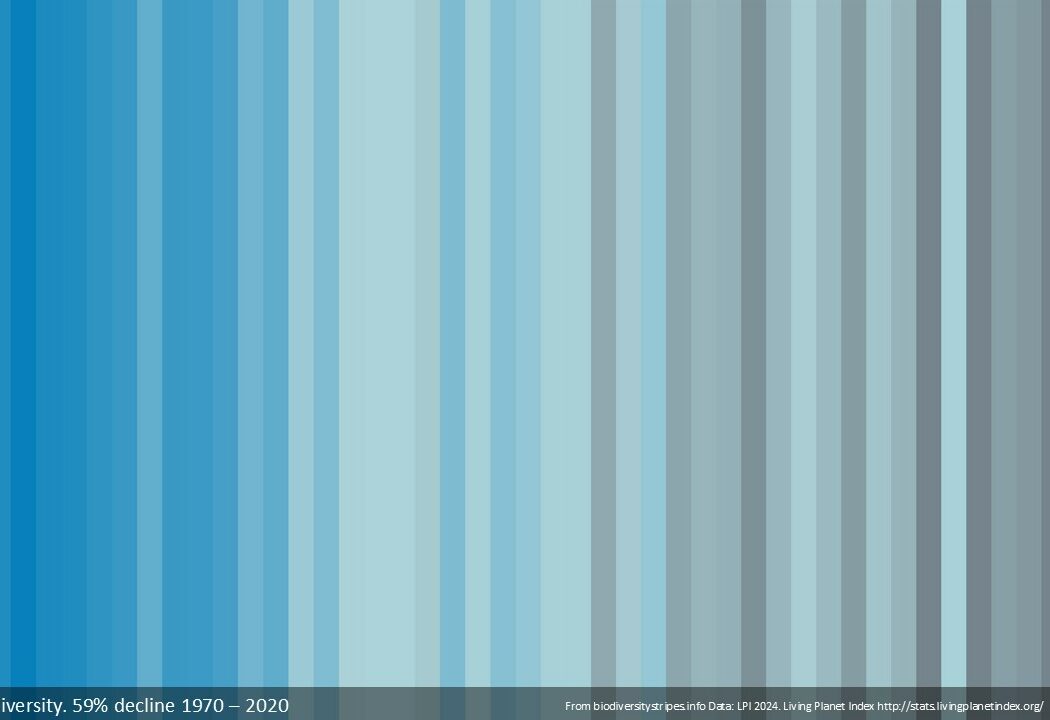
A new set of ocean stripes developed by Miles Richardson at the University of Derby communicates the decline in marine biodiversity and acts as a call for ocean action, writes Gemma Parkes, Head of Communications at the Nature Positive Initiative.
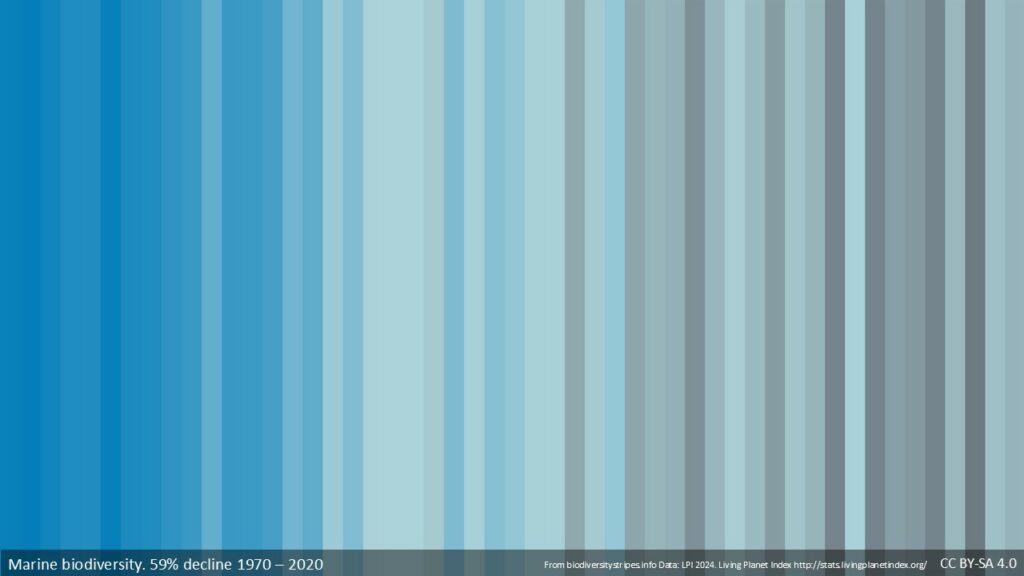
The striking spectrum of blues catches the eye – ranging from rich cobalt through azures, turquoises and out to lighter aquamarines and watery dove greys.
But behind this compelling image lies a wake-up call. The stripes represent the dramatic decline in marine biodiversity since 1970. Unless we reverse the trend, we will lose even more life in our ocean – with disastrous consequences for the health of the ocean and, by implication, the entire planet and ourselves. We rely on a stable and healthy natural world for our ability to live and thrive on the planet, and the ocean is a major part of that.
These ‘ocean stripes’ are a stark reminder that we are losing life in our seas at an alarming rate, and a call to take urgent action. Drawn from the latest Living Planet Index (LPI) data from 2024, the stripes symbolically show we have lost 59% of marine wildlife populations since 1970. Given that the ocean – covering over 70% of the Earth’s surface – harbours more than 80% of biodiversity on the planet, this staggering decline should ring alarm bells.
Miles Richardson, Professor of Human Factors and Nature Connectedness at the University of Derby in the UK, has led the work to translate LPI data on nature loss into colourful stripes that symbolically represent the relative decline. This original set of nature stripes, representing biodiversity as a whole, coincided with the Global Biodiversity Framework which was enshrined in 2022 at the UN Convention on Biological Diversity COP15 conference. In this global agreement, all countries pledged to halt and reverse nature loss – no small commitment – and continue working together to ensure the steady ongoing recovery of biodiversity in the decades ahead.
“I created the biodiversity stripes – and now the ocean stripes – as a call to action. They are a stark reminder of what we are losing and how fast that decline is happening. The stripes are available for anyone to download and use freely through Creative Commons, and I sincerely hope they will encourage people to think twice about our relationship with nature – and to realize that the time is now to take action to reverse the decline of the natural world,” explained Professor Richardson.
The ocean stripes, like the nature stripes and others in the series, are a simplification of complex data as a tool for raising awareness – and communicating the urgent need to take action. The intention is to evoke reactions and reflections that are both emotional and cognitive as people grasp the decline of the ocean and the natural world at large.
The original biodiversity stripes are utilized and recognizable in the Nature Positive Initiative’s brand livery, but reversed – running from grey to green instead of green to grey, to indicate the envisioned trajectory of recovery in the natural world that countries committed to achieve in the mission of the Global Biodiversity Framework. We will also be using the reversed ocean stripes to convey the ambition of ocean recovery.
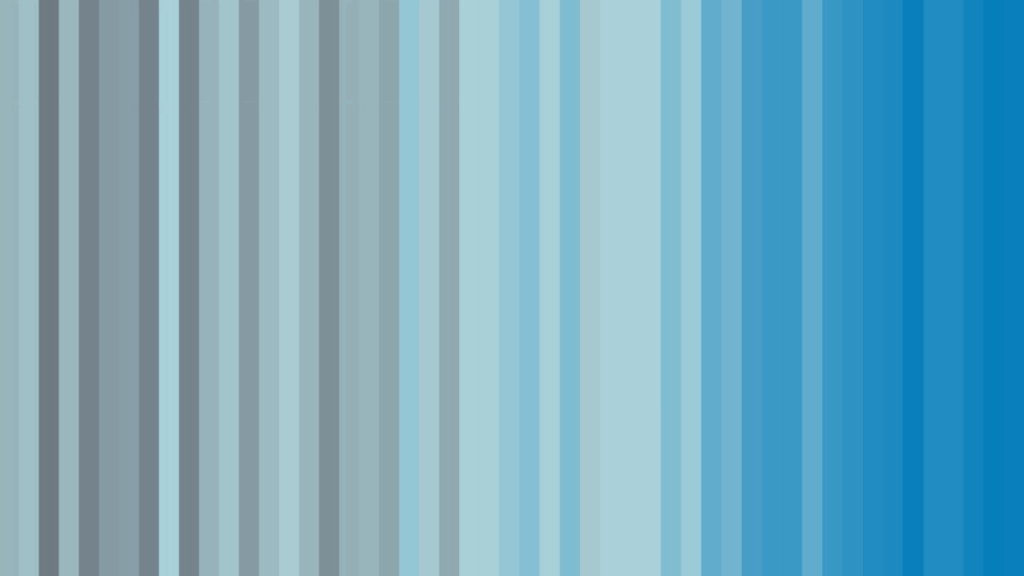
“The ocean’s many shades of blue have always been a source of beauty and inspiration to us. However, the spectrum captured in the ‘ocean stripes’ communicates visually a story of overexploitation and destruction leading to an ocean increasingly empty of life. The ‘Blue Planet’ is turning greyer. This is not something to be simply sad about. The crucial functions the ocean fulfils in regulating climate and global rainfall patterns, providing wild food to billions and more, depends on its state of health. But together we can and must achieve a nature positive – and ocean positive – future, shifting from an ocean-negative to ocean-positive culture, society and economy, and to also in turn secure a better future for people as we all ultimately rely on the one, mighty but also extremely vulnerable ocean,” said Marco Lambertini, Convener of the Nature Positive Initiative.
The Nature Positive Initiative, together with the World Economic Forum and the Ocean Risk and Resilience Action Alliance, is convening a wide range of organizations to build consensus on marine metrics to provide a globally aligned framework that can guide ocean actors – from policymakers and businesses to financial institutions and communities – towards measurable, credible and science-based progress in addressing the negative impacts on the ocean and assessing whether marine life is recovering. Over the coming months, the partnership will work towards a collaborative roadmap in building consensus on marine state of nature metrics. This is a collaborative process and its strength lies in the voices shaping it. All interested parties are encouraged to engage by registering interest via this form.
The original nature stripes were inspired by the climate stripes – a parallel visualization showing relative global temperature rise through 1970-2020 developed by Ed Hawkins, Professor of Climate Science at the University of Reading, UK.
Sign up to our newsletter
You may
Also like...
-
Last chance to review: finalizing a state of nature metrics framework
Over the past almost two years, the Nature Positive Initiative has been working with partners to build wide consensus and align around one set of state of nature metrics to determine nature-positive outcomes. Now the final consultation is here.
naturepositive.org -
Davos amidst polarization: nature still stands strong
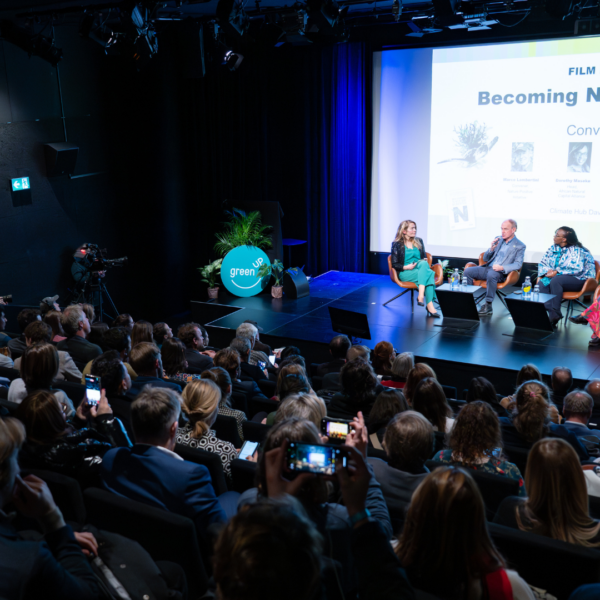
Updates from the Nature Positive Initiative in Davos this year, during the World Economic Forum's Annual Meeting.
naturepositive.org -
New film ‘Becoming Nature Positive’ premieres in Davos
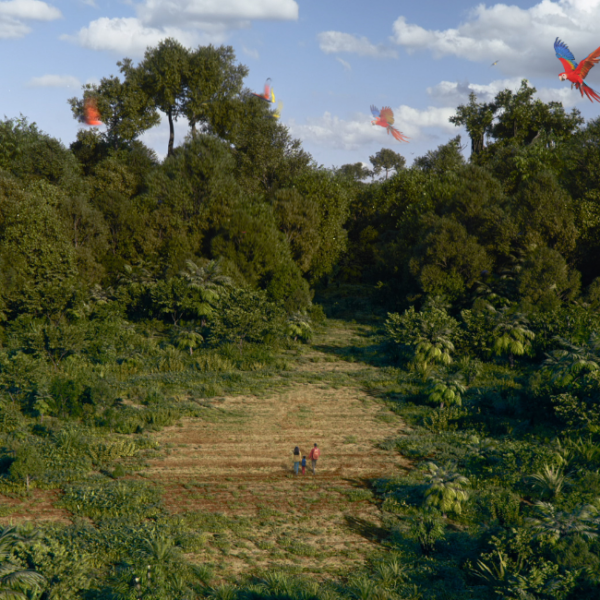
A new short film, ‘Becoming Nature Positive’, is being screened for the first time today at a special green carpet première event at Climate Hub Davos in the Kulturplatz cinema, coinciding with the World Economic Forum’s Annual Meeting.
naturepositive.org