As the biodiversity crisis accelerates and the material relevance of biodiversity loss to the economy and society is increasingly evident, there is a growing need and demand for decision-useful nature-related data and measurement methodologies, in particular by the private sector and financial institutions.
In response, a group of organizations at the forefront of promoting a sustainable economy – the Nature Positive Initiative (NPI), World Business Council for Sustainable Development (WBCSD), Capitals Coalition (CapsCo), Global Reporting Initiative (GRI), International Union for Conservation of Nature (IUCN), Taskforce on Nature-related Financial Disclosures (TNFD), and World Resources Institute (WRI) – have identified the need for a Nature Measurement Protocol. NPI and WBCSD will convene the development of this collaborative effort.
The move comes as interest and engagement in nature-related disclosure and target-setting is increasing across the private sector globally, particularly among investors. As a result, regulators and accounting standards bodies are beginning to embed norms and requirements for companies and financial institutions to report on their nature-related dependencies, impacts, risks and opportunities and how they are contributing to the global goal to halt and reverse nature loss. While important progress has been made to identify metrics for business and finance to use with respect to their dependencies and impacts on nature, the lack of consensus around the measurement methodology is affecting clarity, confidence, adoption and most importantly, action.
Today’s announcement is made as key discussions on climate action are underway in Brazil at COP30 – with nature-related impacts and risks recognized as a crucial intersecting dimension. Plans for a Nature Measurement Protocol reflect feedback from market participants, and a recommendation from TNFD in its recently released report on upgrading the nature data value chain for market participants. While there are a number of existing initiatives tackling aspects of this challenge, there is no single shared reference protocol for scalable, interoperable measurement of key nature-related metrics on nature for use by business. Building on the contribution made by the Greenhouse Gas (GHG) Protocol (developed and administered by WBCSD and WRI), in the carbon accounting sphere, there is an urgent need to fill the gap regarding nature and further develop the necessary synergies between the climate and nature agendas.
A Nature Measurement Protocol is a crucial tool to drive higher quality internal decision-making and external reporting on nature positive transitions, track overall progress in credible and comparable ways, and help unlock new finance for nature positive outcomes.
This new Nature Protocol would provide standardized methodologies and tools, link site-level data to national and global goals and bridge nature, carbon and financial accounting standards. The initiative will build on a strong foundation of existing work, synthesizing best practices into a single, adaptable toolbox for implementation and update.
The announcement of the development of a Nature Measurement Protocol should not delay action until the protocol is completed. It is crucial that companies continue, or take action now to begin, measurement using existing metrics and tools. The Nature Measurement Protocol will encompass existing approaches and fill important gaps.
The supporting organizations will take a phased and inclusive approach to developing the Nature Measurement Protocol, engaging a diverse and critical mass of experts as well as primary users across different sectors and geographies through open innovation and pilot testing. The Protocol will then be ready for scaling and wide use, and embedding in frameworks and standards, with a suitable long-term governance for it once established.
QUOTES OF SUPPORT
Marco Lambertini, Convener of the Nature Positive Initiative, said:
“Nature has never been higher in the corporate agenda as material impacts on operations and supply chain grow as a result of escalating ecosystem degradation and biodiversity loss. But the perceived complexity of biodiversity is undermining corporate nature-positive transitions. The Protocol will offer clarity and align guidance for business and finance to address their negative impacts on nature and, as a result, also help derisk their operations and supply chains, reduce negative externalities on society and unlock new business opportunities”.
Dominic Waughray, Executive Vice President at World Business Council for Sustainable Development (WBCSD), said:
“For over two decades, the GHG Protocol has shown the power of business alignment behind a common standard. It created a global public good that enables companies, investors and policymakers to understand and compare climate impact. Now, we must do the same for nature. A Nature Measurement Protocol can provide the shared language and practical framework needed to embed nature into reporting, investment and value creation. Translating nature’s complexity for measurement and reporting will take effort – but with rising risks and the urgent need to halt and reverse nature loss, the opportunity to shape a resilient, nature-positive economy is one we cannot afford to miss.”
Mark Gough, CEO of Capitals Coalition, said:
“A Nature Measurement Protocol will strengthen alignment and build the rigor needed to give CFOs the confidence to put nature on the balance sheet. It will integrate nature into existing accounting systems so that the flow of financial capital is directed towards nature positive activities.”
Robin Hodess, CEO of the Global Reporting Initiative (GRI), said:
“GRI is pleased to support the creation of the Nature Measurement Protocol, which will help meet the needs of stakeholders for comparable, decision-useful data on nature. When we developed the GRI 101 Biodiversity Standard, published in 2024, our multistakeholder expert group highlighted the urgent need for a globally consistent approach to measuring impacts on nature. This initiative represents an important step toward achieving that goal.”
Dr Grethel Aguilar, Director General of the International Union for Conservation of Nature (IUCN), said:
“With strong recognition that society must tackle global environmental impacts together, IUCN is more committed than ever to developing tools and frameworks that help companies deliver rapid, high-integrity nature positive outcomes. We welcome working collaboratively, leveraging our expertise and existing methodologies, such as IUCN RHINO launched recently at IUCN’s World Conservation Congress, to help define a Nature Protocol, offering aligned and clear guidance to the private sector that will accelerate no-regrets actions that are robust, aligned with compliance and reporting requirements, and based on science.”
Erin Billman, CEO, Science Based Targets Network (SBTN), said:
“The Science Based Targets Network’s Accounting Guidelines for Impacts on Land Use and the Environment (AGILE) will be an important building block for this protocol. Its accounting and calculation methods will enable companies to understand and measure important components of their land impacts by supporting the development of baselines and measurement of footprints for land targets. By aligning with and building on existing guidance from the GHG Protocol Land Sector and Removals Guidance (draft), Accountability Framework initiative guidance and others, AGILE is an important starting point for the development of accounting and calculation guidelines for target-setting around land impacts. SBTN looks forward to contributing this resource to the design and development of a Nature Measurement Protocol to ensure it facilitates corporate adoption and implementation of science-based targets for nature.”
Tony Goldner, CEO of Taskforce on Nature-related Financial Disclosures (TNFD), said:
“The TNFD welcomes this initiative in response to our recommendations for upgrading the nature data value chain issued last week. Over the past four years through the work of the Taskforce and market application of its recommendations and guidance, including the LEAP assessment approach, it has become clear that the inconsistency of measurement underpinning corporate reporting undermines comparability for investors; a critical requirement for better risk management and capital allocation to transition to a net zero and nature positive future. A nature measurement protocol, providing practical measurement guidance and driving consistent practice, will help strengthen the architecture for action by business and finance.”
Craig Hanson, Managing Director for Programs, World Resources Institute (WRI), said:
“Creating a common protocol for nature is the next critical step for science-driven decisions. Drawing on our experience with the Greenhouse Gas Protocol, we’re poised to help shape clear, practical standards that lay the groundwork for corporate and government efforts to protect and restore nature. Through our Land & Carbon Lab, we’ll also bring insights on nature- and land-use related data that are not only robust and comparable, but also ready to drive the real-world action the world urgently needs.”
For media enquiries please contact:
Gemma Parkes, Head of Communications, Nature Positive Initiative, at gparkes@naturepositive.org
Sign up to our newsletter
You may
Also like...
-
Last chance to review: finalizing a state of nature metrics framework
Over the past almost two years, the Nature Positive Initiative has been working with partners to build wide consensus and align around one set of state of nature metrics to determine nature-positive outcomes. Now the final consultation is here.
naturepositive.org -
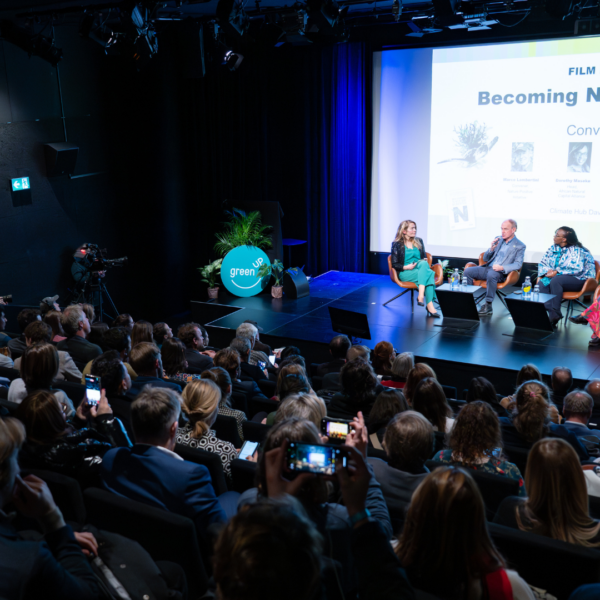
Davos amidst polarization: nature still stands strong
Updates from the Nature Positive Initiative in Davos this year, during the World Economic Forum's Annual Meeting.
naturepositive.org -
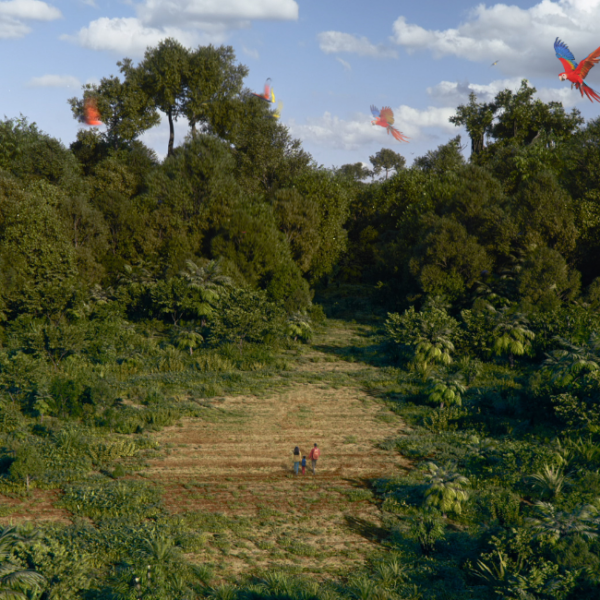
New film ‘Becoming Nature Positive’ premieres in Davos
A new short film, ‘Becoming Nature Positive’, is being screened for the first time today at a special green carpet première event at Climate Hub Davos in the Kulturplatz cinema, coinciding with the World Economic Forum’s Annual Meeting.
naturepositive.org