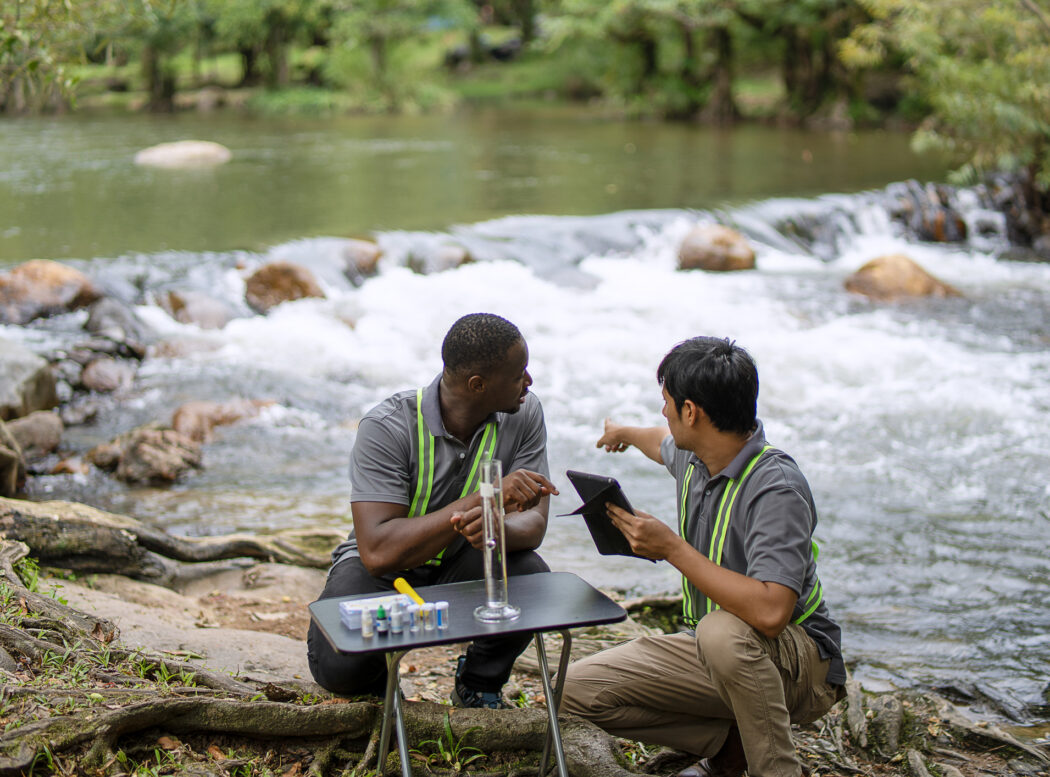
In 2025, the Nature Positive Initiative worked with partners to pilot test the draft terrestrial State of Nature Metrics. 29 companies piloted the metrics framework developed after an in-depth consensus building process and have shared invaluable feedback and insights, which goes towards refinement of the final set of State of Nature Metrics.
Spanning more than 50 sites in 23 countries, the pilot companies were drawn from a variety of sectors including forestry & agriculture, mining, infrastructure, renewable energy, manufacturing and finance to ensure the metrics could meet the needs of a wide variety of uses. The piloting programme reached a successful conclusion, with companies sharing useful insights that have informed a revision of the state of nature metrics framework to ensure that it is both practical and credible.
Key feedback emerging from the piloting programme
Some of the key themes that emerged from the draft terrestrial State of Nature Metrics piloting programme are:
1) Main indicators
The main indicators focusing on ecosystems and species that were outlined in the draft set of metrics are well supported by organizations who completed the piloting and they can be practically measurable. Some revisions were needed to further hone the accuracy and impact of measuring ecosystem extent, condition and species in order to ensure they best capture nature-positive outcomes. The organizations involved noted a few challenges in gathering sufficient information and provided practical feedback on how to clarify the metrics and guidance. Between piloting companies, all indicators were well tested. Lanzajet, for example, piloted six of the seven draft indicators, covering ecosystem extent, natural/semi-natural habitat proportion and condition, site and landscape condition, and species extinction risk, at their sites in Malaysia and Northwest Borneo.
2) Granularity scales
Data availability emerged as a defining factor in how easily companies could apply the metrics. Some sites had access to long-term ecological monitoring programmes, while others relied on limited baseline data or remote sensing inputs. Vale, one of the largest mining companies in Latin America, has very unique ecosystems present at the site where they tested the metrics, and so local datasets were required.
The level of granularity in the State of Nature Metrics was set up to match the variances in metric use cases, company nature reporting maturity or data availability. The framework supports a requirement for greater granularity (i.e. more robust measurements) as a company progresses on their measurement journey. At the start of the scale, the piloting programme revealed that minimum granularity requirements need to be made easier to support companies in beginning their nature-positive journey.
3) Guidance updates
No two sites are alike. Differences in ecological context, location information and land-use history, and restoration potential, mean that there are a whole range of unique challenges and opportunities that the metrics must work within. For example, Suzano applied the metrics in their managed plantations and surrounding natural ecosystems to demonstrate how their operations impact on the environment. Piloting partners emphasized the importance of guidance that allows for contextual interpretation without compromising the metrics’ scientific integrity.
A key improvement will be to update the supporting guidance iteratively to account for innovations in tech and data availability.
Scope and scale
We heard from several piloting partners recently about their experiences and insights in putting the State of Nature Metrics to the test. At the IUCN World Conservation Congress in October and COP30 in November, the Nature Positive Initiative hosted sessions on metrics involving many partners, both piloting partners such as BirdLife International and TNFD and piloting companies from Vale and Suzano to Volkswagen Group and Bracell.
Amongst the insights revealed through the piloting phase, it was highlighted that incorporating new biodiversity metrics into existing monitoring, planning and reporting systems requires coordination across teams, from sustainability and operations to GIS and site managers. Participants also commented that measurable, transparent metrics will help guide strategic decisions, align with international frameworks such as the Taskforce on Nature-related Financial Disclosures and help companies contribute to the implementation of global agreements such as the Global Biodiversity Framework.
Next steps for the project to align state of nature metrics globally
As the last consultation on the revised metrics draws to a close, we will finalize the metrics set based on this feedback, and then shift attention to how these metrics can be embedded within disclosure and target setting frameworks, and what support those framework organizations need to be able to do so. Very preliminary work has also begun on the development of a Nature Measurement Protocol, which can in the longer term ensure that the methodologies that business need to measure and manage nature-related impacts, dependencies, risks and opportunities can be standardized and updated as the data and metrics landscape innovates and evolves.
Stay informed and connected by joining the Nature Positive Forum, a global community committed to advancing the Nature Positive mission.
Sign up to our newsletter
You may
Also like...
-
Last chance to review: finalizing a state of nature metrics framework
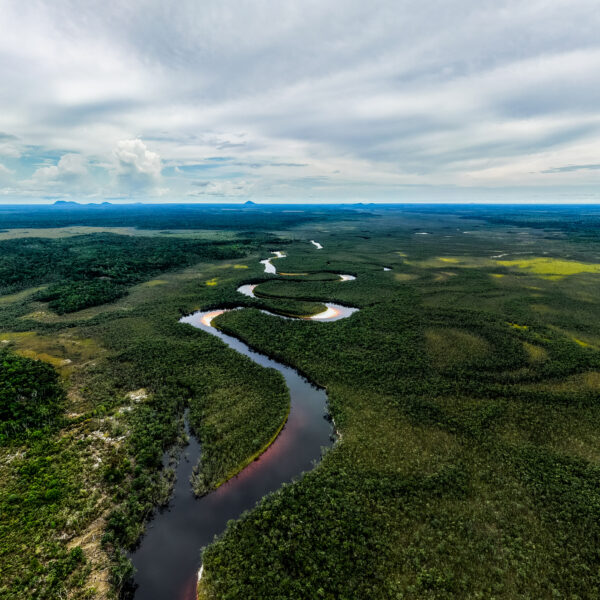
Over the past almost two years, the Nature Positive Initiative has been working with partners to build wide consensus and align around one set of state of nature metrics to determine nature-positive outcomes. Now the final consultation is here.
naturepositive.org -
Davos amidst polarization: nature still stands strong
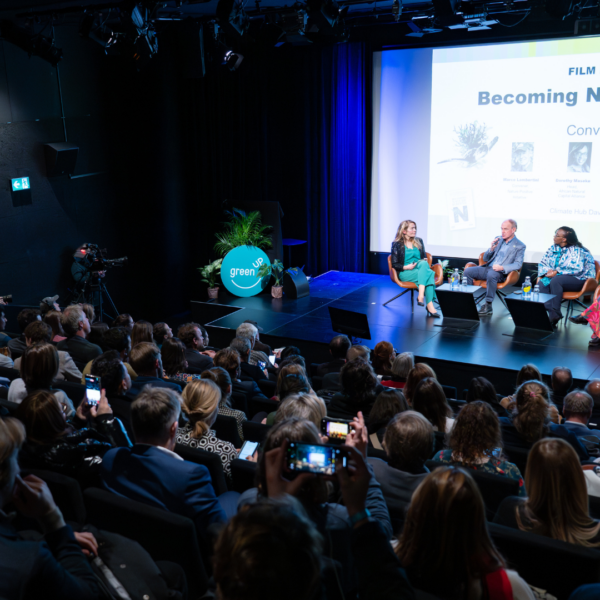
Updates from the Nature Positive Initiative in Davos this year, during the World Economic Forum's Annual Meeting.
naturepositive.org -
New film ‘Becoming Nature Positive’ premieres in Davos
A new short film, ‘Becoming Nature Positive’, is being screened for the first time today at a special green carpet première event at Climate Hub Davos in the Kulturplatz cinema, coinciding with the World Economic Forum’s Annual Meeting.
naturepositive.org