In the lead-up to the UN General Assembly and Climate Action Week in New York, two questions were on everyone’s mind. Would deep geopolitical fractures across the world affect the UNGA agenda? And would the political headwinds gaining strength particularly in the US and Europe derail governments’ and corporates’ commitments and actions to tackle the climate and nature crises?
Last week in New York, I witnessed two parallel universes collide – with another hovering in the wings. The universes of today’s polarized and split society.
A ‘Old Universe’ that reflects the ‘post-truth era’ we live in, an era where politicians pretend to replace scientists and feel authorized to deny the evidence promoting theories founded on fabricated information. A universe where a large number of people, destabilized by change, let themselves be seduced by convenient populist narratives advocating business as usual, and join ‘identities’ built on false information and conspiracy theories as an antidote to uncertainty and fear for the future.
This universe is reflected in the tragi-comic performances in the UN Assembly Hall, with certain leaders denying in front of the world all sorts of blatant realities, from climate chaos to famine and people’s suffering. Lies under the sun have become acceptable. In the ‘Old Universe’, ancestral tribalism is violently re-emerging with leaders prioritizing their own country and people – in reality more often their own faction – against the rest of humanity, instead of calling for global cohesion and the concerted and ambitious action that is needed to address the global challenges everyone faces.
They reject multilateralism, and they reject a model of global cohesion and multilateral dialogue amongst countries. The institution of the United Nations itself is under serious attack, legitimately criticized for being overly bureaucratic, fragmented and inefficient but without an apparent alternative being proposed. Certain UN agencies have already implemented redundancies for up to 30% of their personnel. Behind the glittering acronym of UN80 – celebrating the UN’s 80th anniversary – is an attempt to proactively reform and regain the confidence in the institution, anticipating being gutted otherwise. Just over a year from now a new UN Secretary General will have to be elected and many fear that that would be the moment in which the anti-multilateralists will seek their chance to stab the UN at the heart.
This is a ‘Universe’ based on the old neoclassical liberal economic model that triggered today’s ‘development paradox’ of an economic model based on the unsustainable over exploitation of finite natural resources. Development at the expense of nature – the foundation of our economy and wellbeing. A model that, as nature declines, obviously cannot continue much longer.
Meanwhile, a ’New Universe’ is also assembling, not exactly through a ‘big bang’ but rather more quietly and progressively over the past several years. A universe of an increasingly forward-looking community of governments, individuals and companies that refuse to look away, and cannot deny the failures of our old economic system, the threats emerging for our future and the need for change. This ‘New Universe’ struggles with building confidence in the transition and is frustrated by the slow pace of change, and even angry at their impotence against the obstructionism of the ‘Old Universe’.
This ‘New Universe’ was present and active in New York outside the UNGA across the multitude of events at New York Climate Week. But how did it compare with previous, ’better’ years? Well, New York Climate Week 2025 broke records on attendance and number of events. In the discussions happening across the city, corporate representation was significant and vibrant. Climate and nature have entered a new dimension. I have seen them move from being a moral question and seen as doing the right things, to PR exercises and brand protection, to compliance, and finally they are increasingly perceived as linked to material risks and opportunities. Climate- and nature/biodiversity-related risks are beginning to be part of the fiduciary responsibility of boards and legal risk oversight of CFOs and CEOs. They have entered the P&L, strategy and business growth discussions. Not just about risks but also opportunities – to do things differently, develop more sustainable technologies, practices and products.
Now the focus is on building confidence in more companies and financial institutions to embark on a nature-positive transition and on equipping boards and management with tools to assess impacts, develop responses and measure nature-positive outcomes. TNFD’s report for Boards, ‘Ask better questions on nature’, their forthcoming ‘Nature Data Facility’, WBCSD’s insights piece on ‘driving business accountability for nature action along the value chain’ and the Nature Positive Initiative universal State of Nature Metrics (currently being piloted) are all new tools to support the private sector and other actors to contribute concretely and credibly to the Nature Positive global goal.
During the same week in New York at the UN Climate Summit attended by over 100 countries, many confirmed and even ramped up their emission reductions targets. Chinese President Xi Jinping said that his country will reduce its net GHG emissions by up to 10% from peak levels by 2035, increase the share of non-fossil fuels to over 30% and scale up total forest stock volume. President Lula of Brazil committed USD1b to the new Tropical Forests Forever Fund.
And then there is a third, ‘Disengaged Universe’, languishing on the sidelines, of people simply confused or disillusioned – or worse, intimidated into silence. A large universe that is disengaged, of the many who have lost trust in their leaders – politicians as well as corporates – who no longer vote in democratic elections. Apathy, of course, can be as dangerous as active belligerence, in allowing destruction and negativity to continue unabated. We are talking about something close to half of the western world’s population and growing in the global south too.
“The old world is dying. The new one is struggling to emerge. And in this time of light and shade, monsters are born,” wrote philosopher and activist Antonio Gramsci from prison in 1920s fascist Italy. Today the monsters are the vested interests and their puppet politicians who resist, derail, delay the change needed for a safe and just future.
The inhabitants of these three universes need the same thing. It is not enough to dismiss the ‘Old Universe’ – which has improved the life of many people in many regions of the world for decades. We need a clear and persuasive vision that articulates how the future looks – not in the abstract, but in terms of the real and tangible positive difference it will make to individuals, their families, their businesses. And we need fresh political and corporate leadership – the ‘New Universe – to overcome those who are apathetic and resistant to change, and to accompany and incentivize the transition.
These leaders exist. In New York we met and heard them. The solutions exist.
Political headwinds come and go. But the issue will not. The impacts of climate change and nature loss on our economy, society and individual wellbeing are large and evident today, and will only worsen if unaddressed. Change is inevitable. We can resist it, sticking to today’s nature-negative business-as-usual development model and hope for the best, knowing in our bones that it won’t be good in any way for anyone ultimately – or choose and drive change towards a nature-positive economy and future. It’s time for our Great Choice.
Read more on these thoughts and more in our new book, ‘Becoming Nature Positive: Transitioning to a Safe and Just Future’, which is also now available to download and read for free under our Open Access agreement.
Sign up to our newsletter
You may
Also like...
-
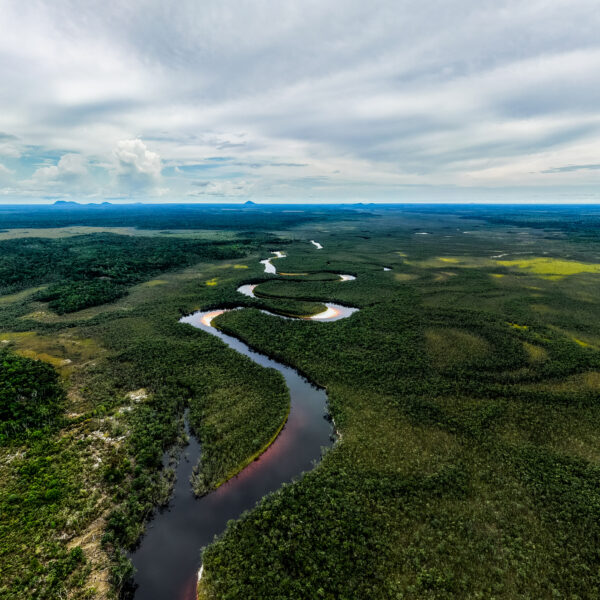
Last chance to review: finalizing a state of nature metrics framework
Over the past almost two years, the Nature Positive Initiative has been working with partners to build wide consensus and align around one set of state of nature metrics to determine nature-positive outcomes. Now the final consultation is here.
naturepositive.org -
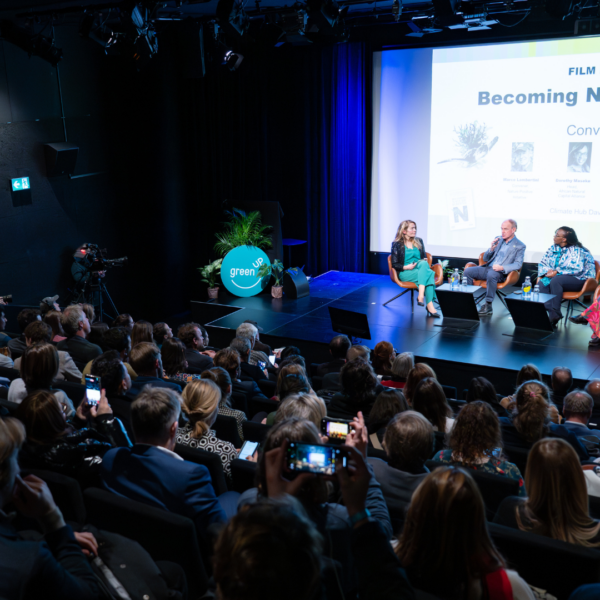
Davos amidst polarization: nature still stands strong
Updates from the Nature Positive Initiative in Davos this year, during the World Economic Forum's Annual Meeting.
naturepositive.org -
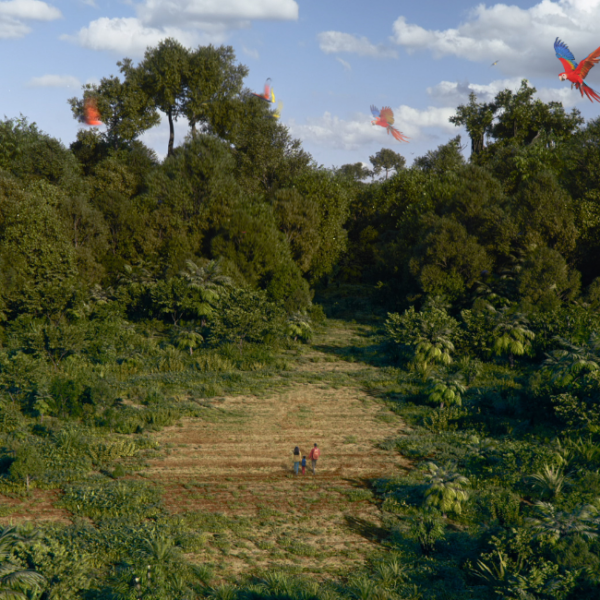
New film ‘Becoming Nature Positive’ premieres in Davos
A new short film, ‘Becoming Nature Positive’, is being screened for the first time today at a special green carpet première event at Climate Hub Davos in the Kulturplatz cinema, coinciding with the World Economic Forum’s Annual Meeting.
naturepositive.org